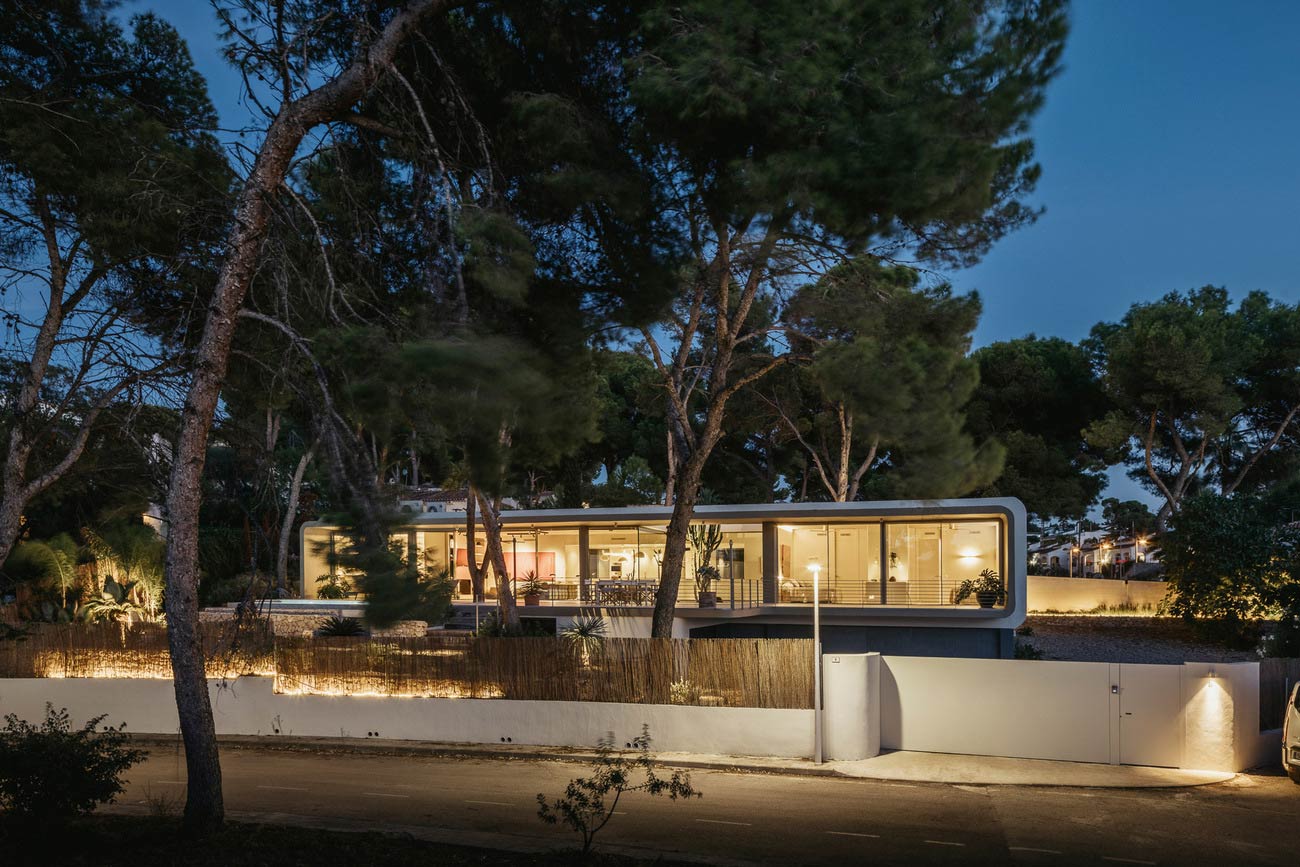

Located on a wooded plot on the Costa Blanca (Alicante), halfway up a slope and surrounded by Mediterranean pine forest, Casa El Buit is conceived as a single-family home designed as a second residence for a family of four. The project starts from a clear premise: to offer a comfortable, durable space capable of integrating naturally into its surroundings.
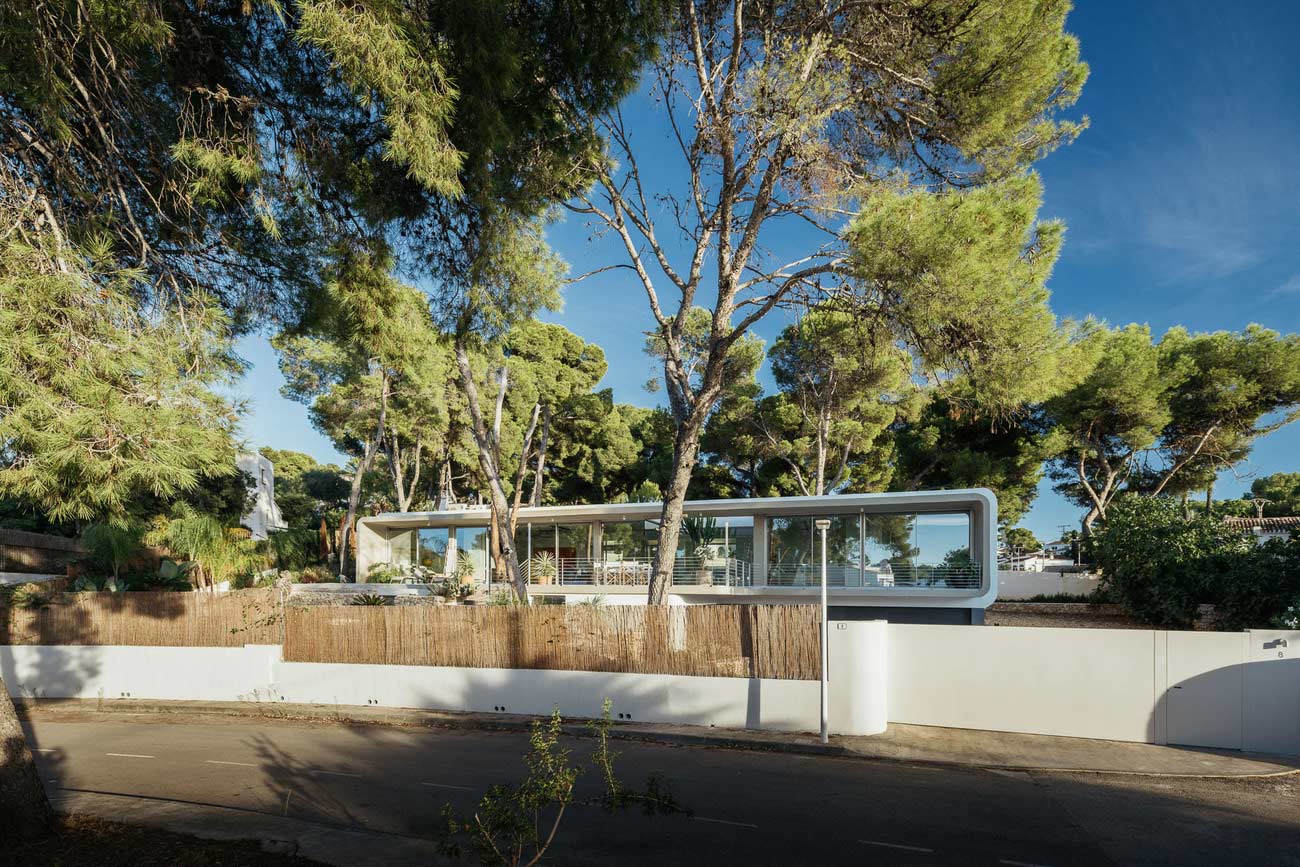
The proposal by Ascoz Arquitectura responds to this intention through a continuous volumetry that unfolds almost entirely on a single level, adapting to the elongated geometry of the site. The house, made of cast-in-place concrete, uses a system of lightweight slabs that reduce the structural weight, allowing for the complete elimination of isolated columns throughout the home, resulting in a sense of spaciousness. It is oriented towards the garden and the pool, establishing a direct relationship with a Mediterranean landscape.
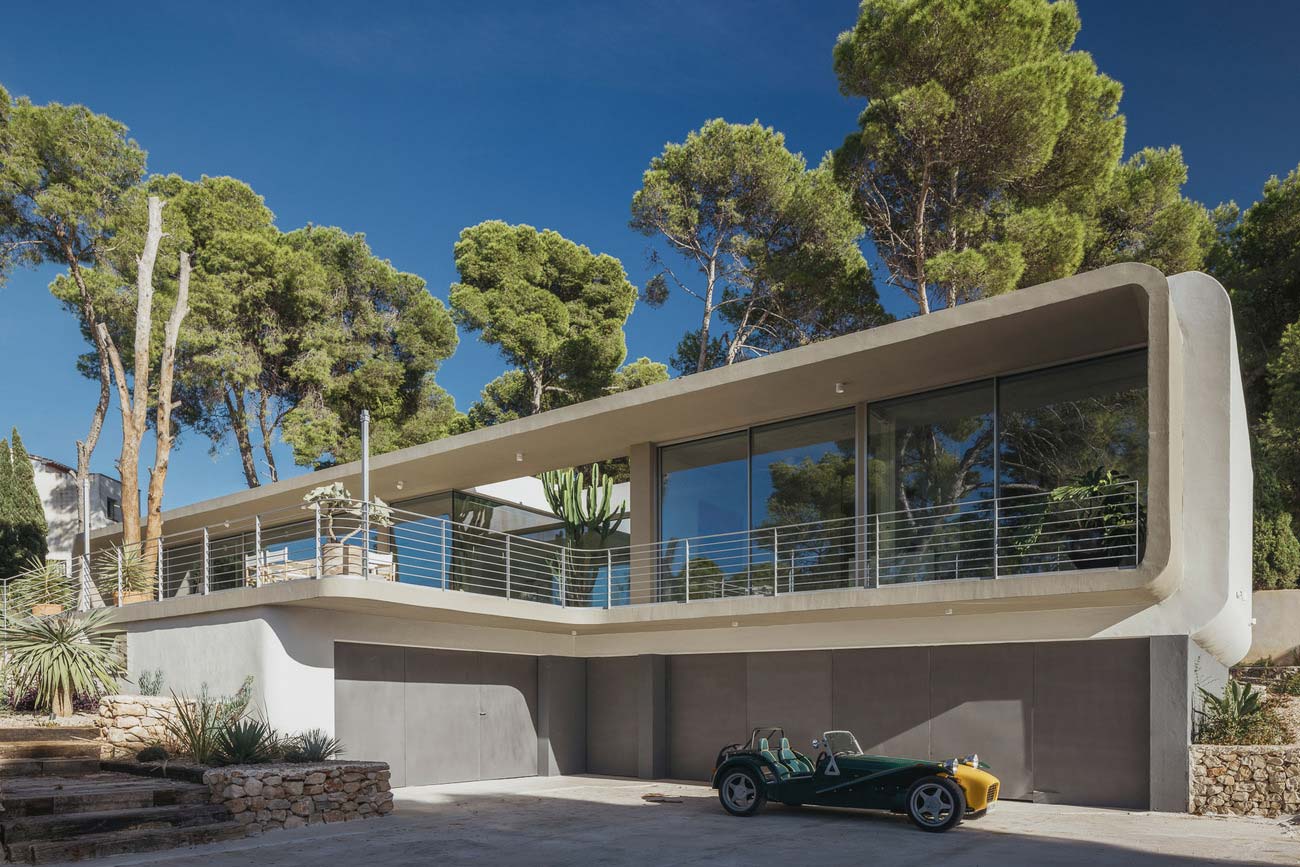

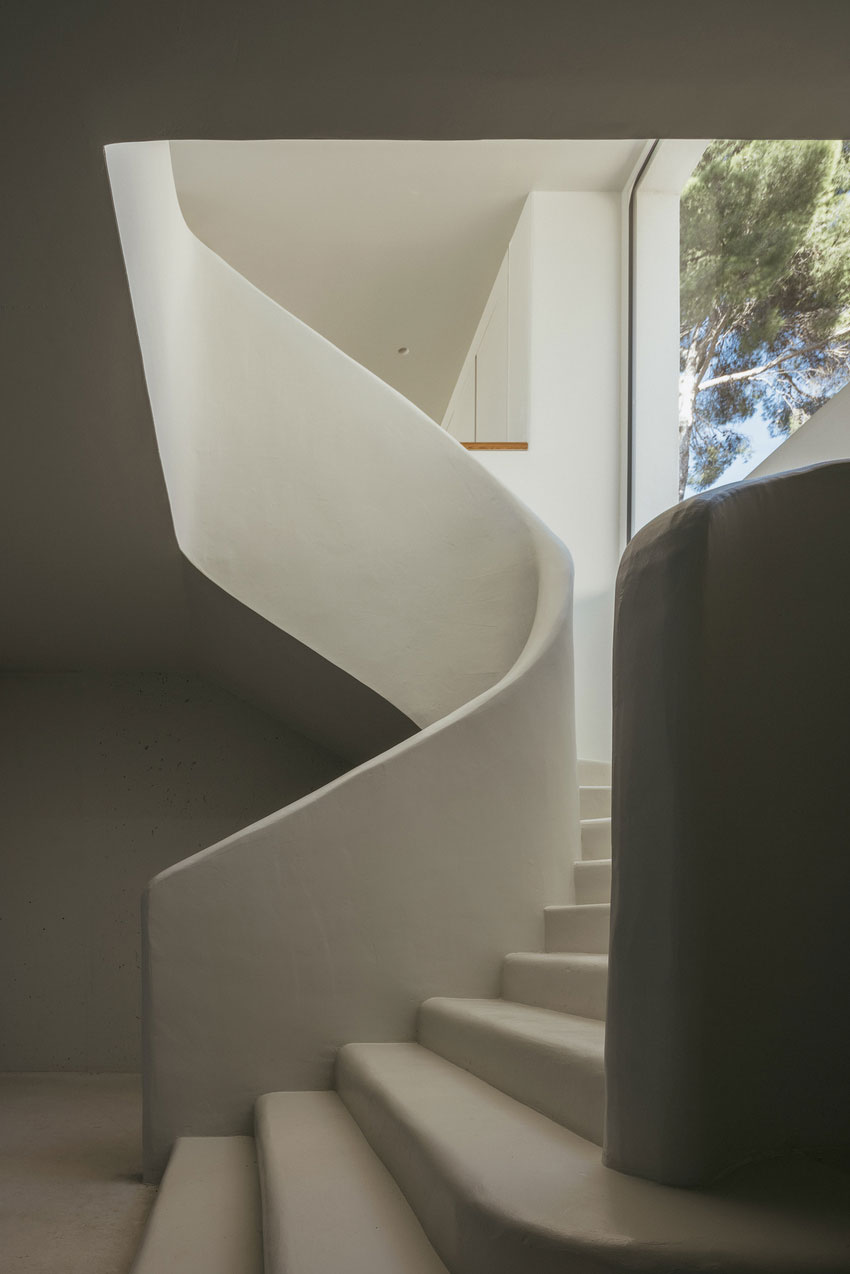
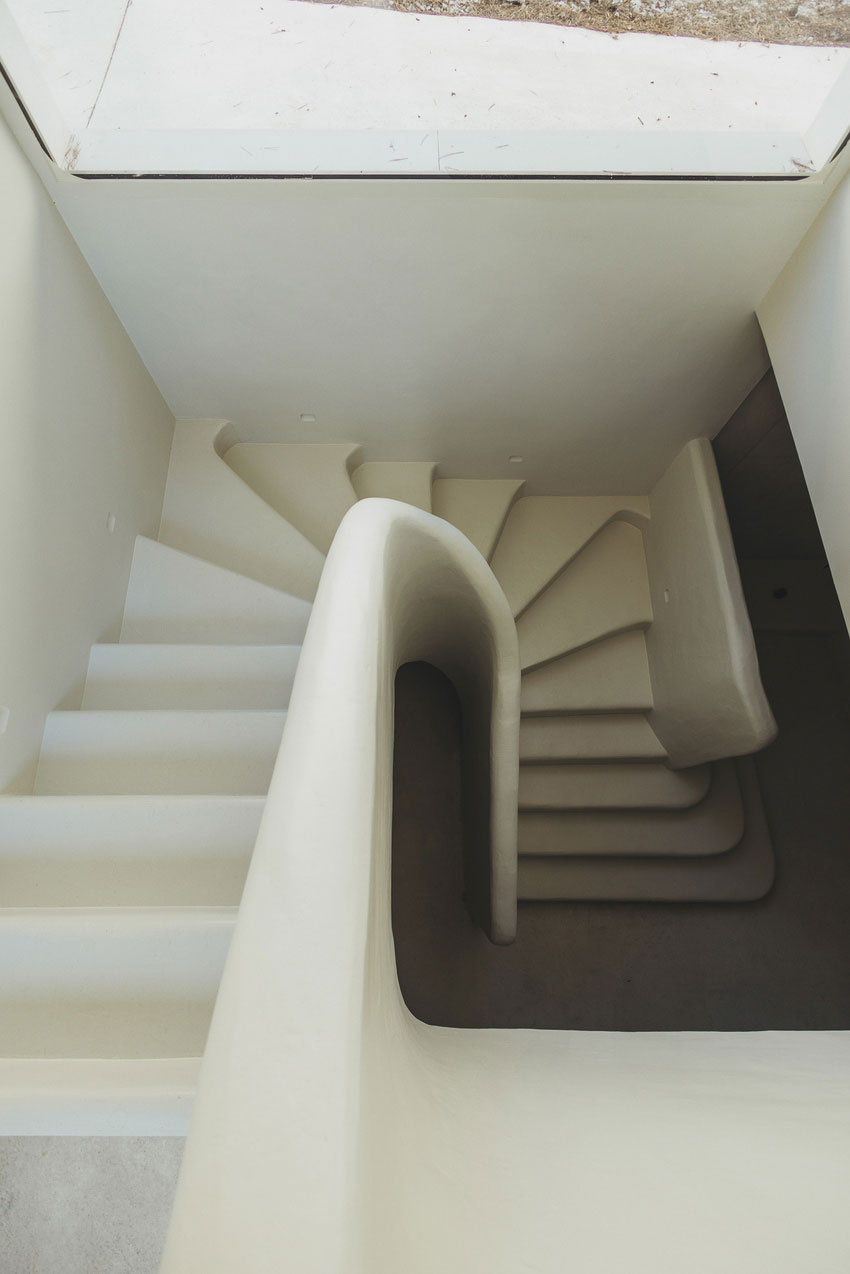
Beyond its siting, the most distinctive feature of Casa El Buit is its Mediterranean character, with curves that recall the avant-garde architecture of the 1970s, now reinterpreted in the 21st century. The house rejects right angles and is constructed through curved lines that define both its structure and material expression. The patio becomes the core of the layout, giving the house its name, “buit,” meaning “void” in Valencian, which provides the dwelling with its essence.
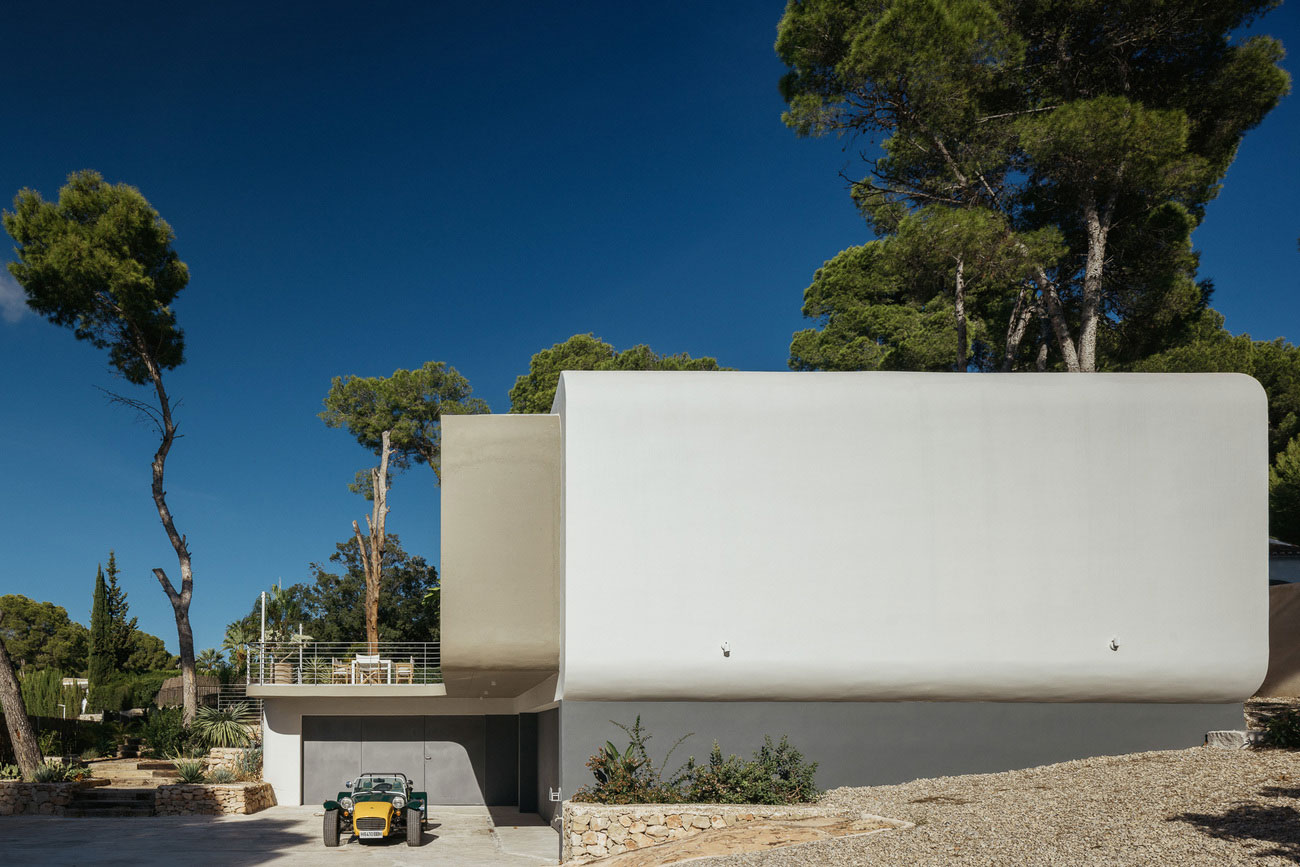
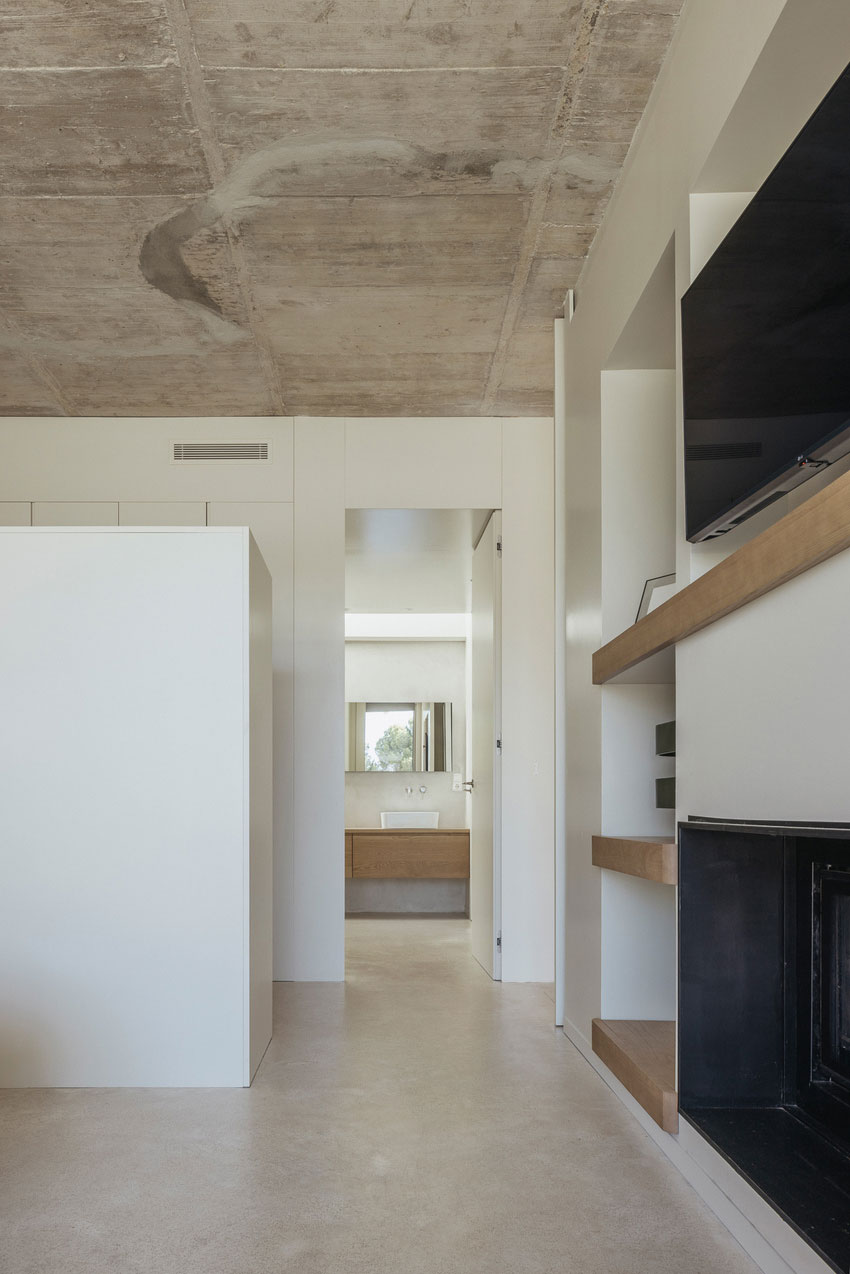
Exposed concrete simultaneously acts as both construction system and final finish, shaping a coherent, unified and unadorned architecture.
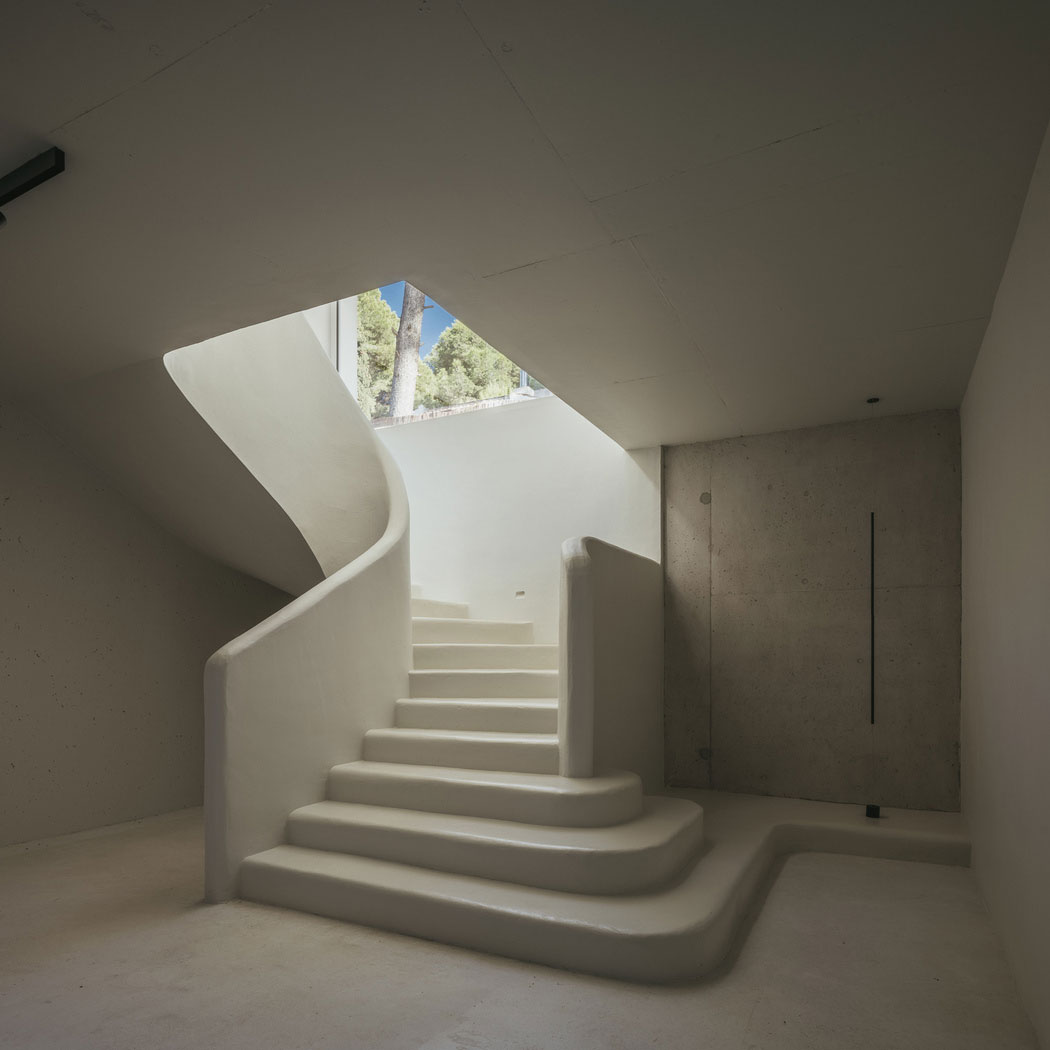
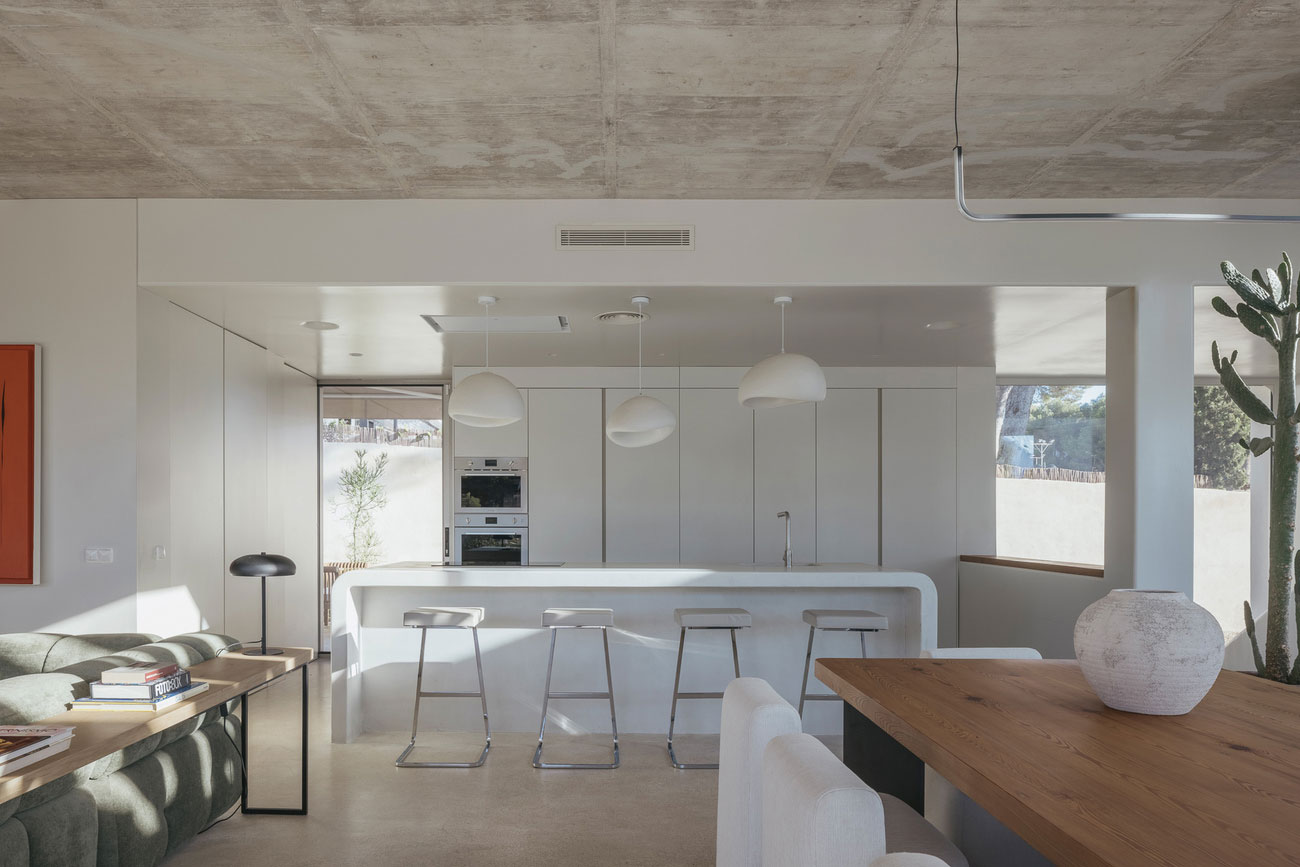
This logic translates into total continuity between elements. Walls, ceilings, the staircase and even the kitchen island are resolved in concrete, executed in situ and adapted to a system of soft curves. The result is a fluid volume that can be read as a ribbon that folds and unfolds to generate spaces, roofs and transitions.
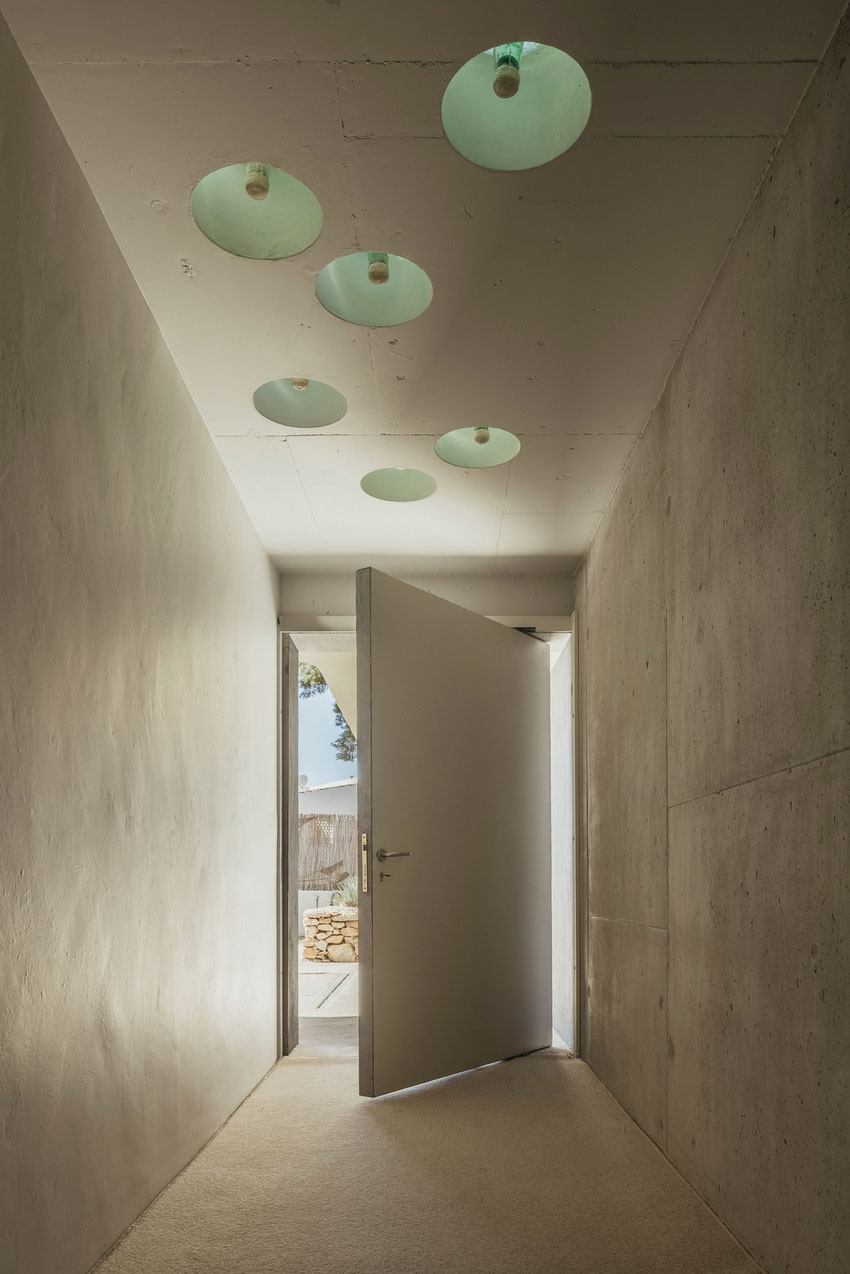
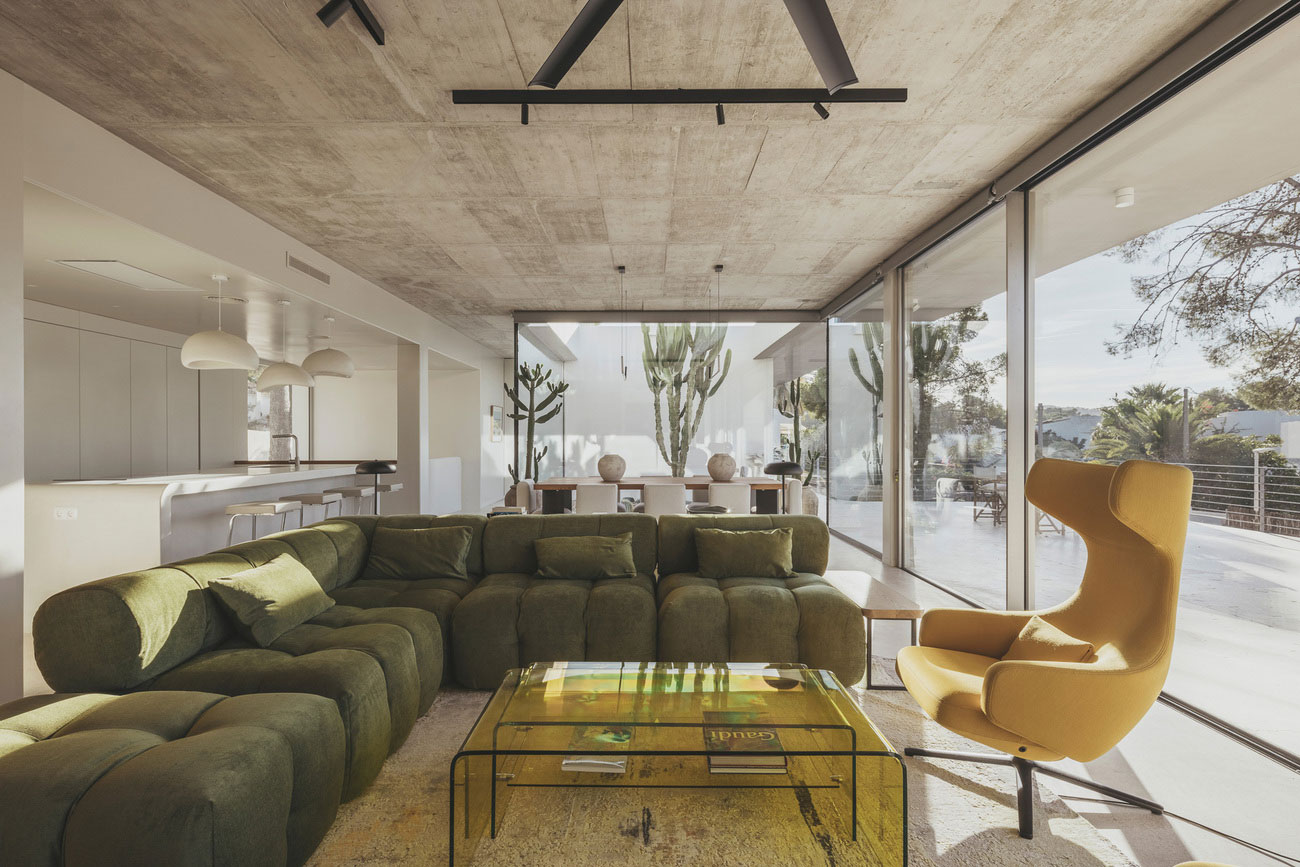
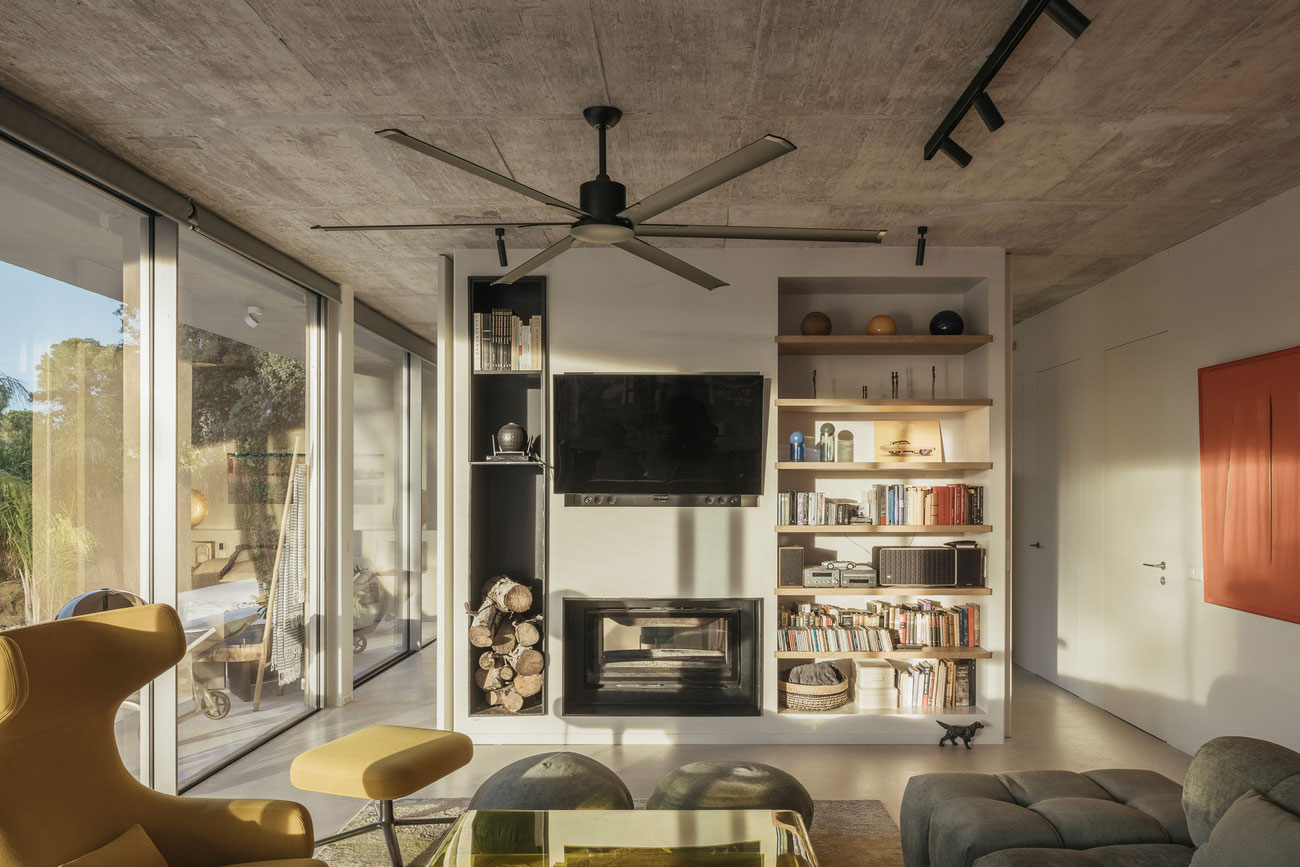
Inside, milled and polished concrete is used as flooring, while the structure remains exposed on the ceilings, eliminating any superfluous cladding. Elements such as bed headboards or built-in furniture reinforce this material continuity, consolidating a precise and uncompromising architectural identity.
The interior design project, by Pampa Interiors, brings warmth to the trowelled concrete and exposed ceiling structure through statement furniture pieces such as the mustard armchair and footrest Grand Repos by Antonio Citterio for Vitra (2011), the Four Seasons stools by Ludwig Mies van der Rohe for Knoll in leather and chrome, and the Season dining chairs by Viccarbe. The silk and cashmere wool rug is by Ikat Valencia, while lighting features brands such as Flos and BPM Lighting.
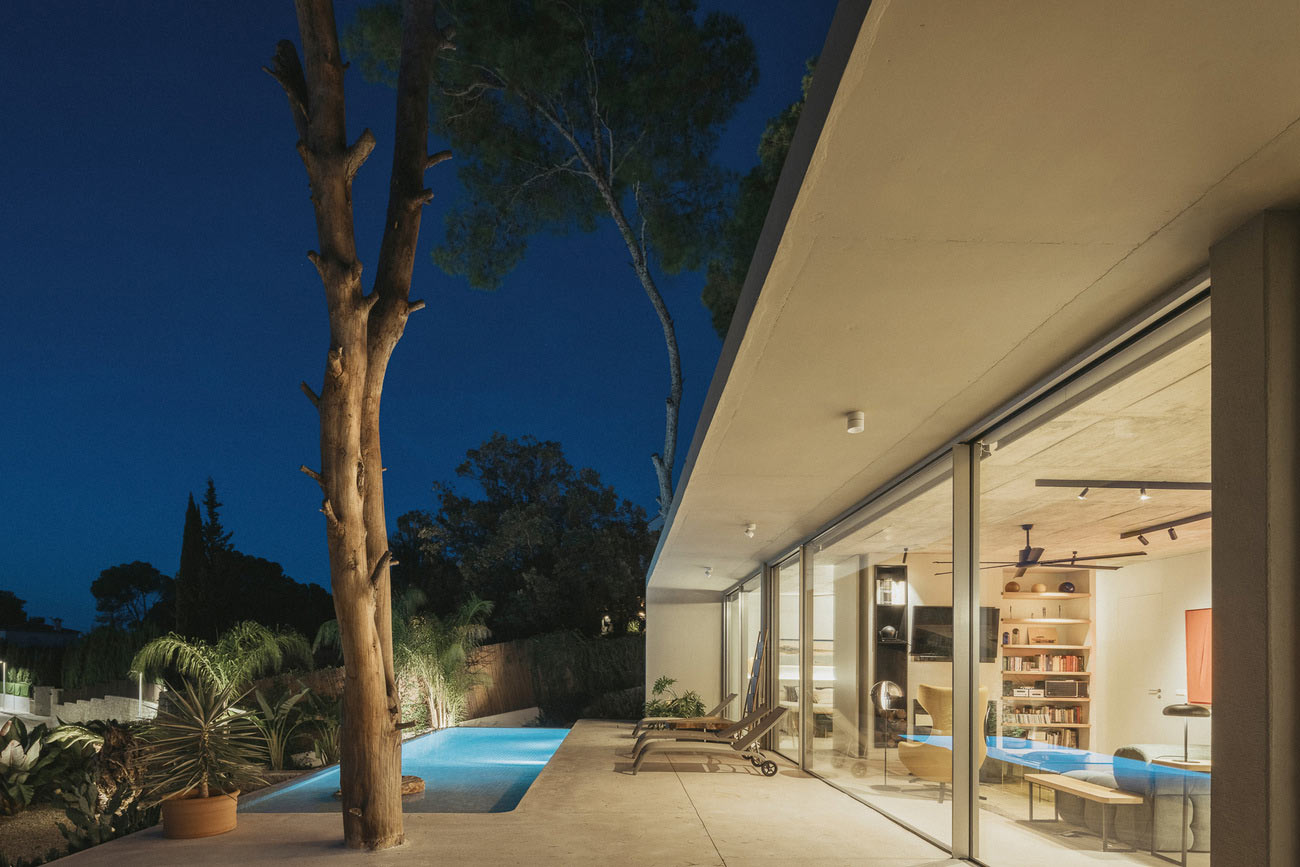
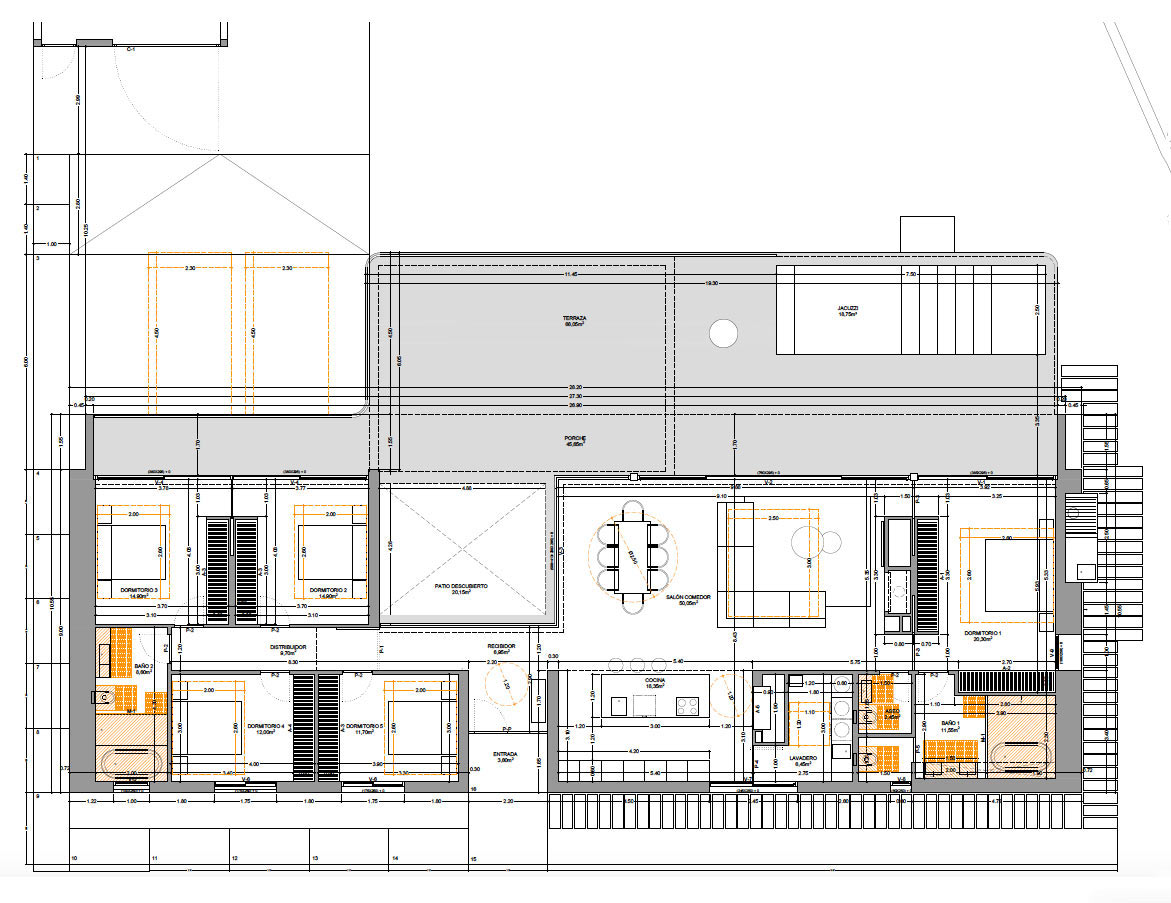
The heart of the home is organized around an open-plan space that integrates the living room, dining area and kitchen, directly connected to the main terrace and pool. An open yet sheltered winter patio introduces light during colder months and acts as a climatic buffer against the wind.
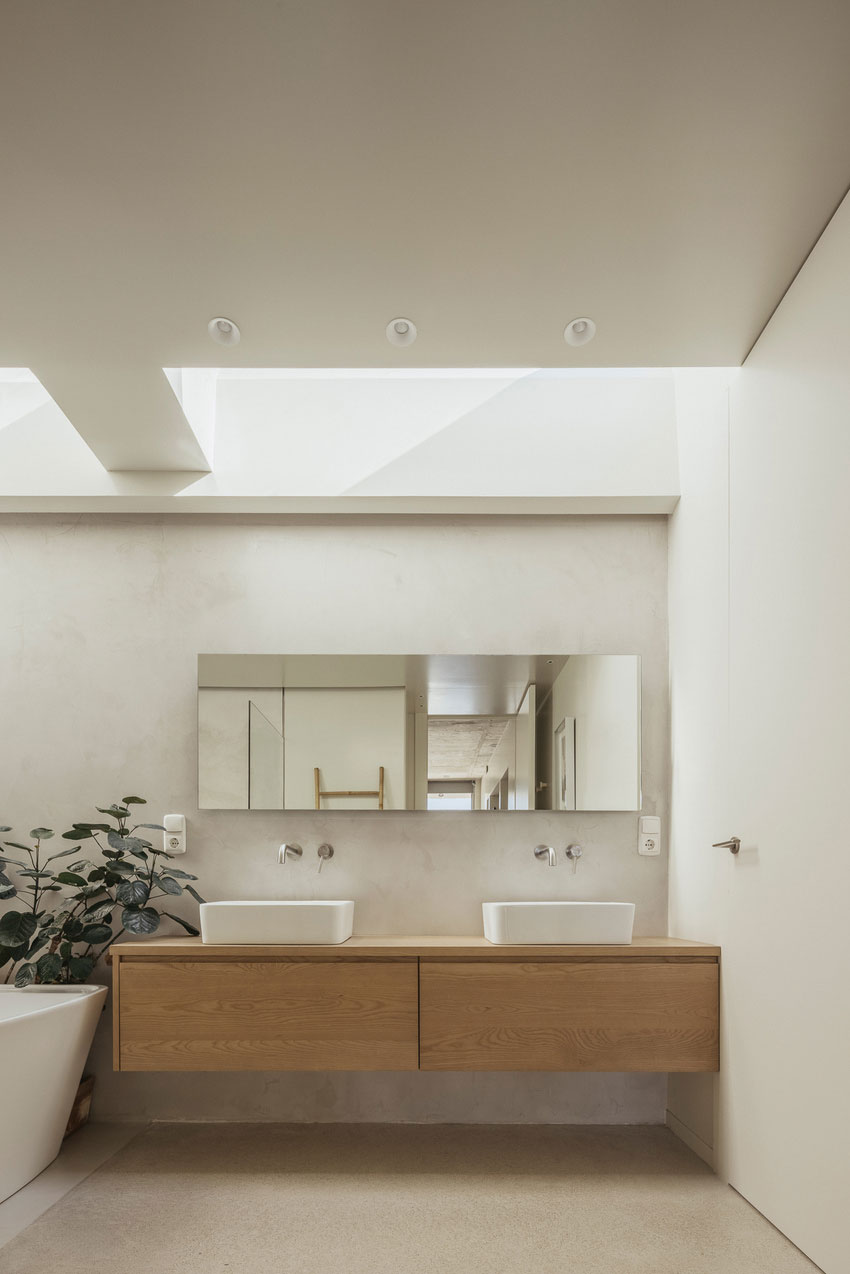
The program is completed with five bedrooms, three bathrooms, a guest toilet and carefully integrated service areas. The main bathroom incorporates a skylight that enhances the entry of natural light, as well as a large built-in shower that maintains material continuity and reinforces a sense of calm. In this space, fixtures by IMEX INOX have been used.
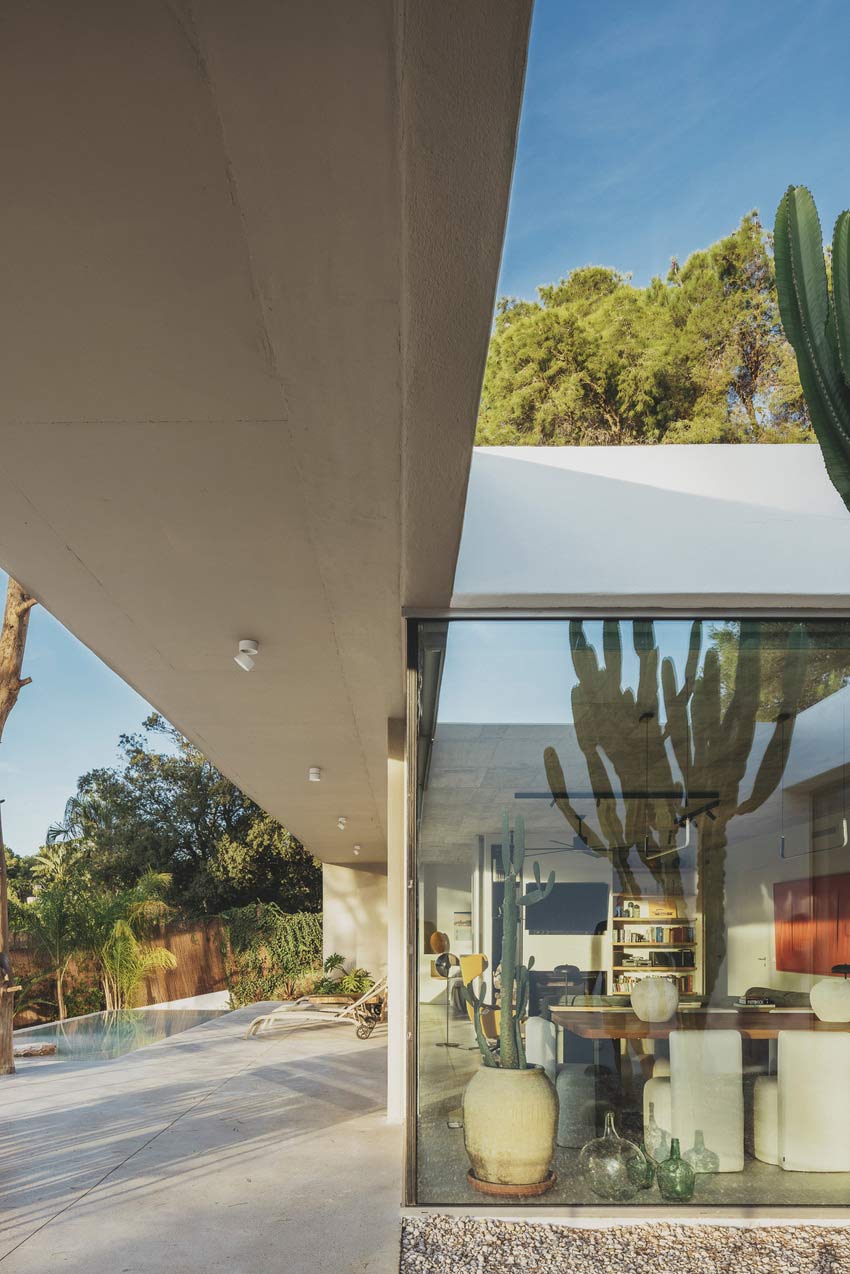
The house has a built area of 260 square meters, complemented by 90 square meters of terrace and pool. At the center of the water surface, an original rock from the site has been preserved and integrated as a singular feature that reinforces the connection between architecture and landscape.

From a construction standpoint, one of the main challenges of the project was materializing an organic language associated with wabi-sabi using a rigid material such as concrete. The development of specific formwork, the control of radii and precision in every junction were key to achieving the desired formal quality.
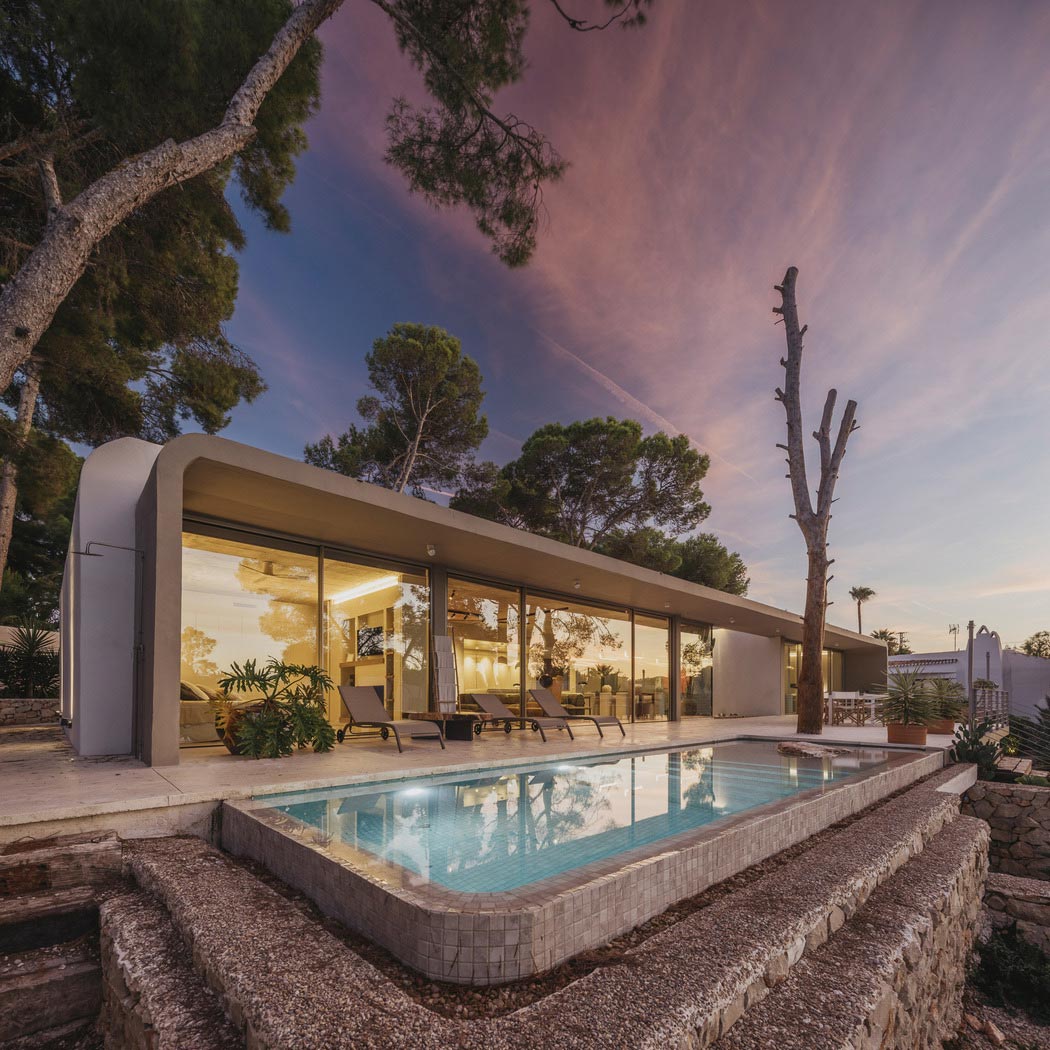
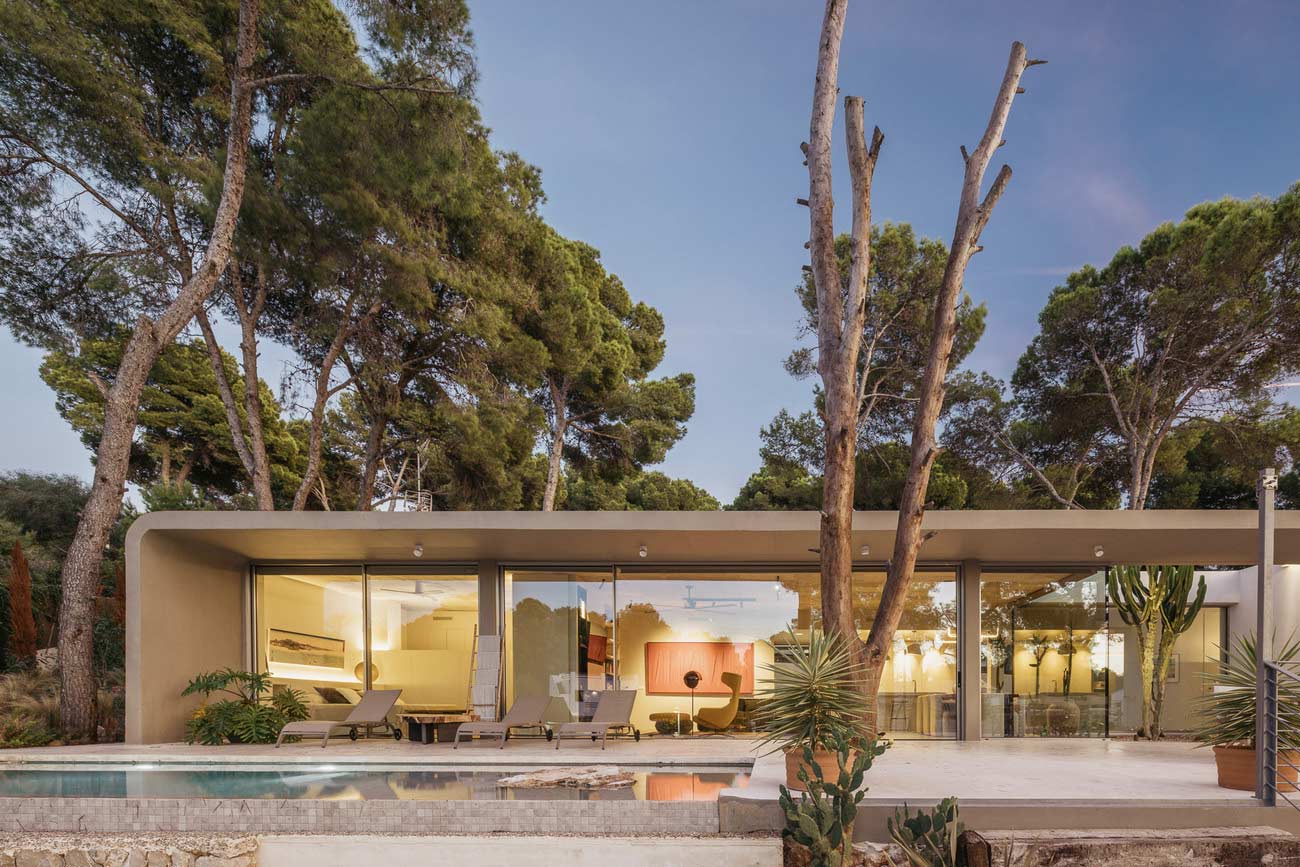
The uneven terrain is resolved through sustainable solutions that incorporate dry stone from the site itself and reused railway sleepers, in line with the material and landscape logic of the project.
Casa El Buit ultimately proposes an essential architecture that finds in the curve a tool to domesticate concrete. A Mediterranean refuge where material, form and context merge naturally, offering a spatial experience based on continuity, serenity and comfort.