
An ancient navel hub Piraeus serves as the primary port for the greater Athens region, facilitating both commercial trade and ferry routes to the islands. Today, the industrial waterfront is entering a phase of cultural recalibration. Within a city block of 19th-century port warehouses, new artistic gravity is emerging: two of Greece’s leading contemporary art galleries have embedded themselves into the historic fabric, re-framing the area with international significance.

Photo: ©Yorgos Kaplanidis.
Re-calibrated tension MPNYC was commissioned to transform a former 19th-century storage warehouse into a multi-use venue capable of hosting lectures, exhibitions, workshops, concerts, dance and theatre performances. Castor Place takes its name from Kastoros Street, itself derived from Castor, one of the Dioscuri twins of Ancient Greek mythology. This lineage introduces an underlying narrative of duality and parallel states that underpins the project. Transformation here is not erasure, but a conscious doubling, where old and new exist in calibrated tension.
When Andreas Kostopoulos received the building, it bore the marks of haphazard interventions. The original 1850s masonry shell, defined by thick load-bearing walls worn by time, had been compromised by a 1990s conversion into a dark, inward-facing nightclub, which imposed a two-story metal extension onto the structure.
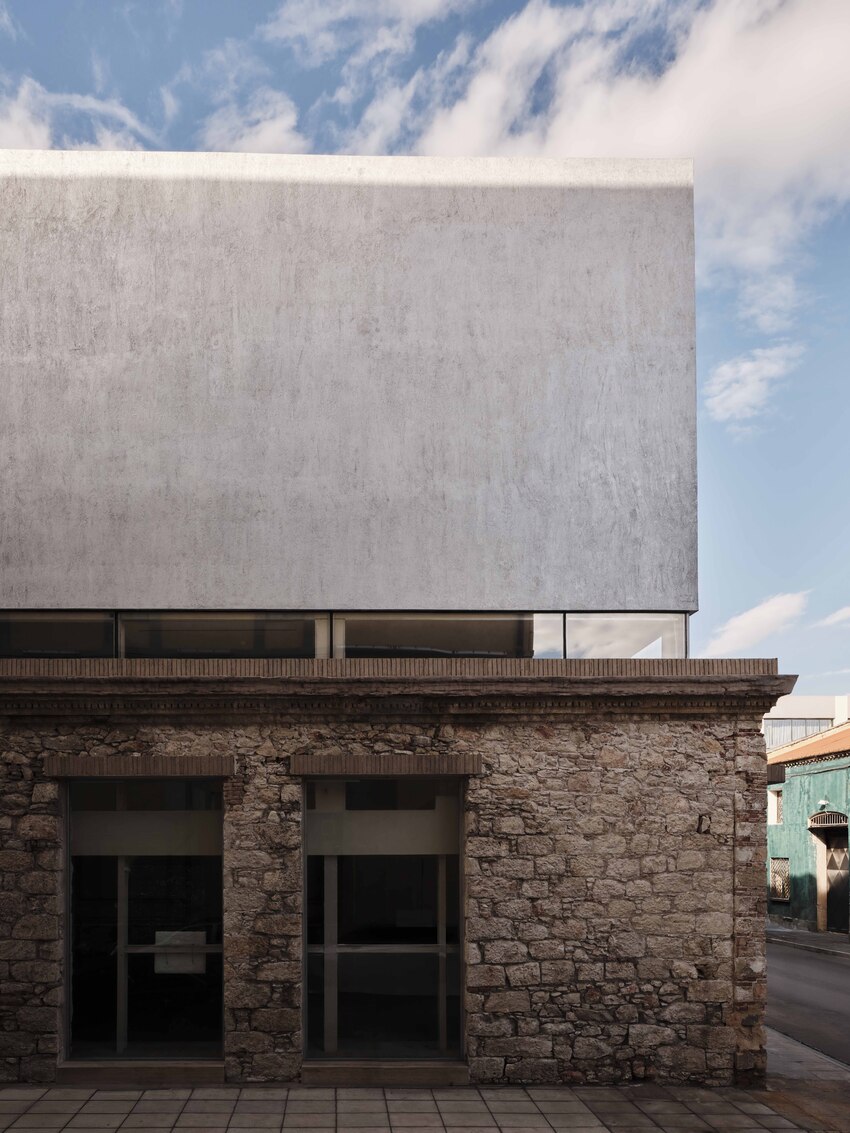
Photo: ©Yorgos Kaplanidis.
Adaptive Reuse
The Fun Palace Legacy The challenge was to reconcile these disparate layers through a method grounded in clarity, adaptability, and light. His reading of the venue’s potential was informed by a familiar theoretical precedent: Cedric Price’s Fun Palace, often described as a “Swiss army knife for the arts”, where indeterminacy and user-driven transformation superseded fixed form. This ethos materialized later in projects such as The Shed, which Andreas engaged with during his time with Liz Diller, where architecture operates as an enabling framework rather than a static object.
Castor Place was similarly conceived as a blank canvas. Modular staging, flexible lighting, and open floor planning allow it to shape-shift seamlessly for diverse functions. By stripping back unnecessary layers and reopening plugged-in windows and doors, the building now functions as an open, welcoming space capable of continuous reconfiguration.
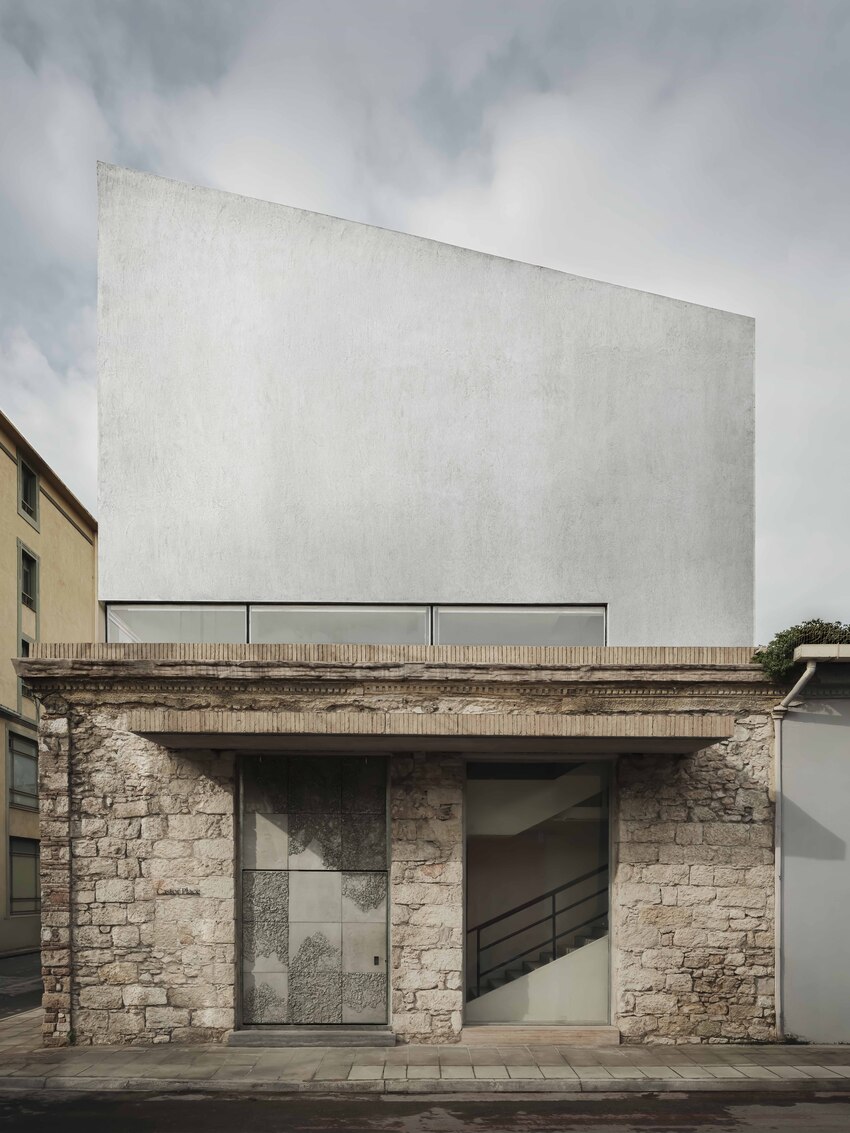
Photo: ©Yorgos Kaplanidis.
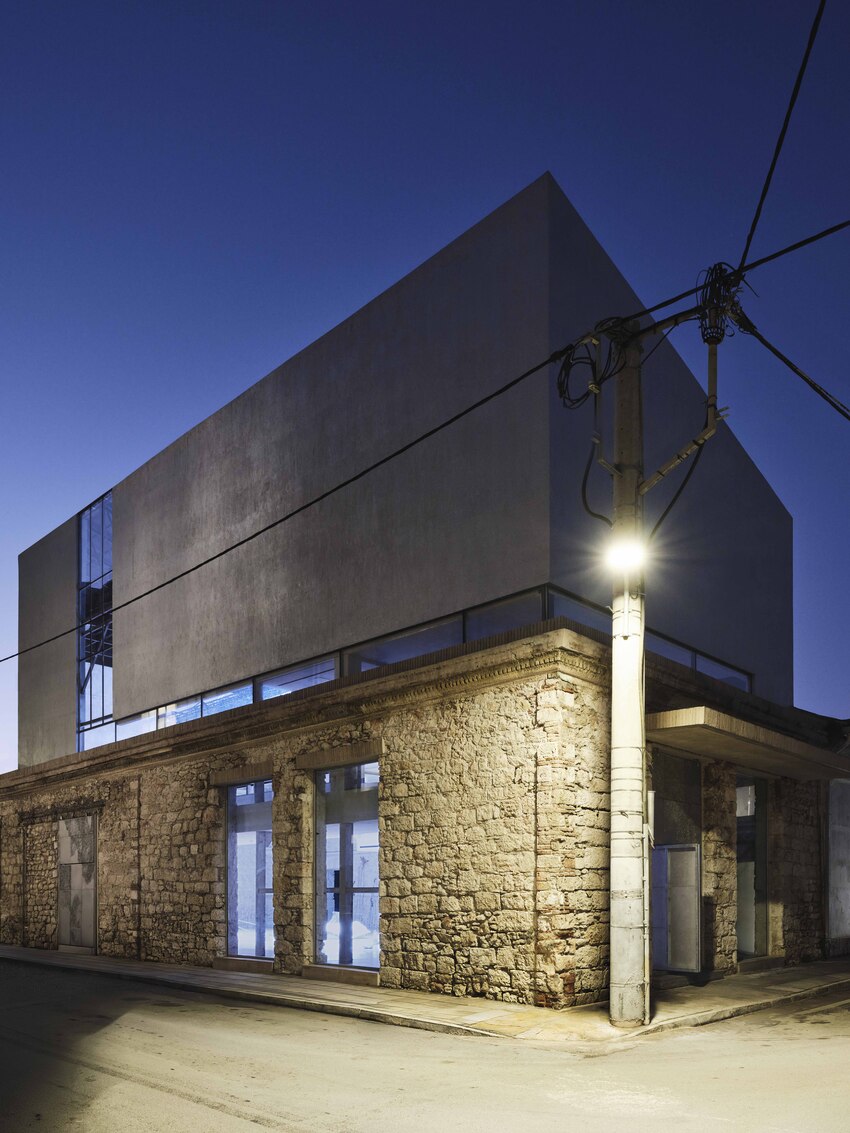
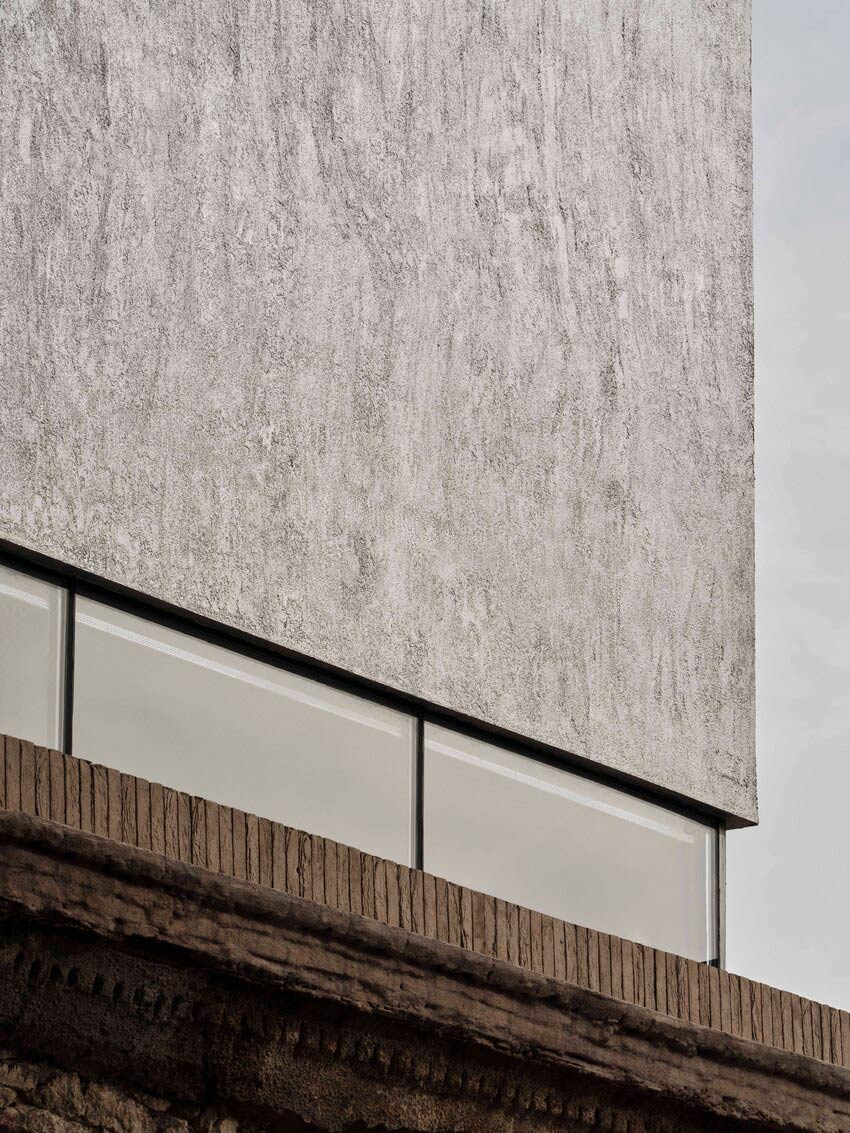
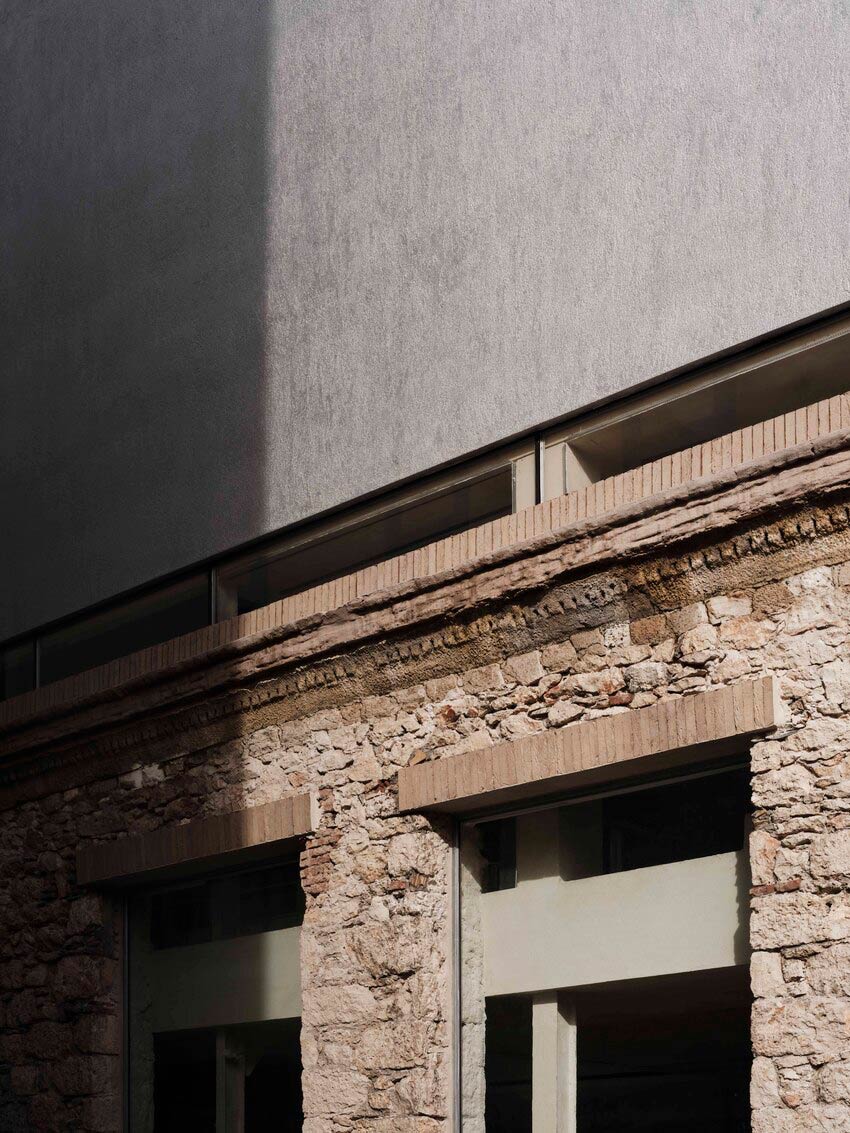
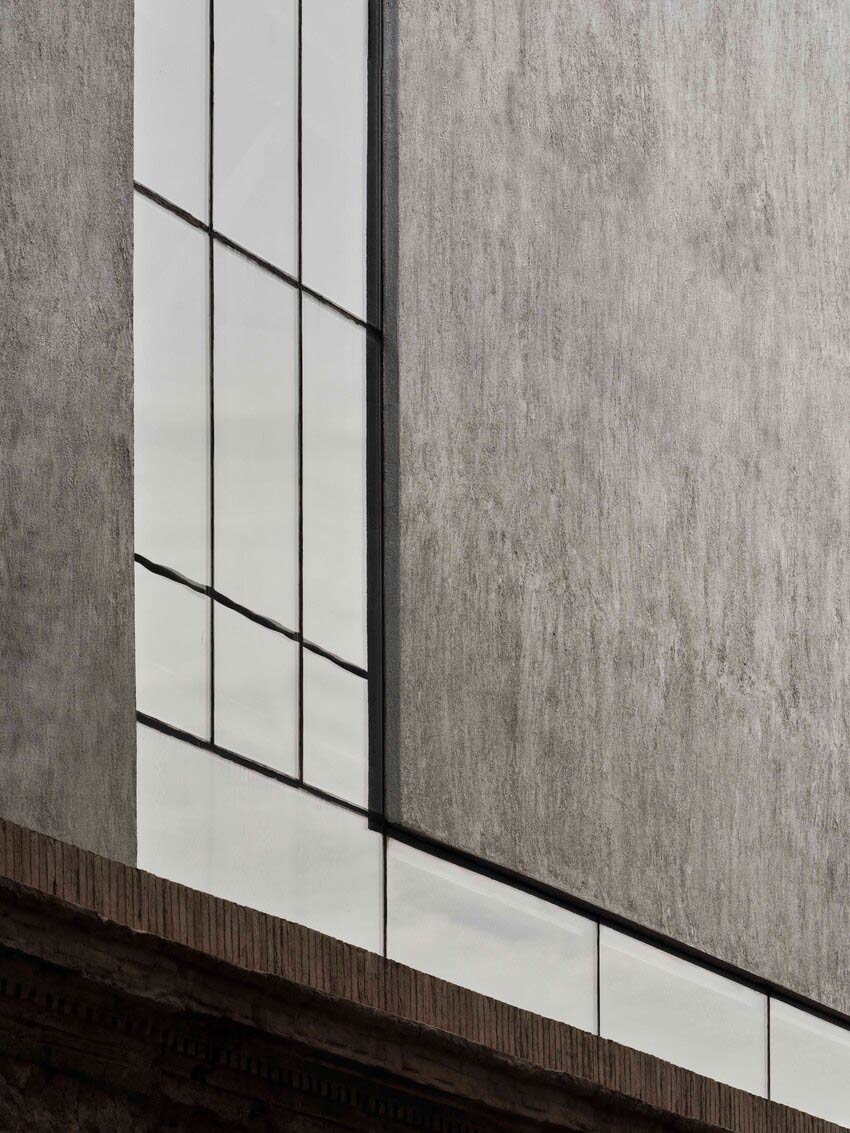
Surgical archeology Andreas’s design strategy operates in an in-between condition: rather than erase its history, he applied a method of surgical archaeology to articulate its disparate layers. The 1990s addition was reinterpreted as a metallic monolithic volume hovering above the original masonry. A slender clerestory window visually separates the two eras, creating the impression of levitation above the original cornice and culminating in a dramatic nine-meter-tall vertical window. This cathedral-like glass opening floods the interior with natural light while revealing the towering heights within that is unique on this block.
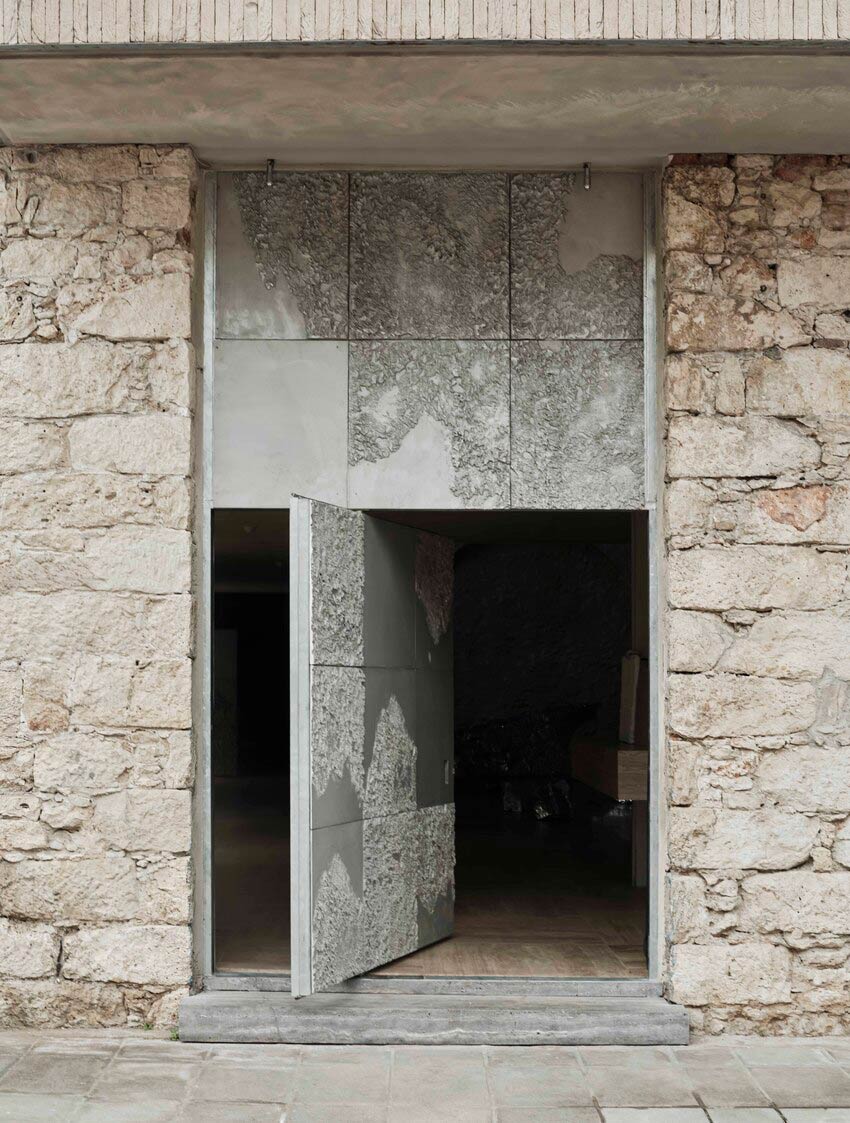
Photo: ©Yorgos Kaplanidis.
Liquid metal The existing, deteriorated metal façade was refurbished to improve acoustic and water insulation, then finished with a liquid metal coating embedded with aluminum microfibers. This surface performs as a responsive skin: protecting from sun exposure whilst producing a shifting reflectivity that atmospherically mirrors the sky above Piraeus.
Below, the porous stone base was restored following the removal of the previous protective plaster. Vintage brick was introduced to reconstruct the canopy and left intentionally un-mortared to preserve the visible discontinuity between past and present. The effect is a calibrated contrast between materials, allowing the building’s temporal layers to remain fully discernible.
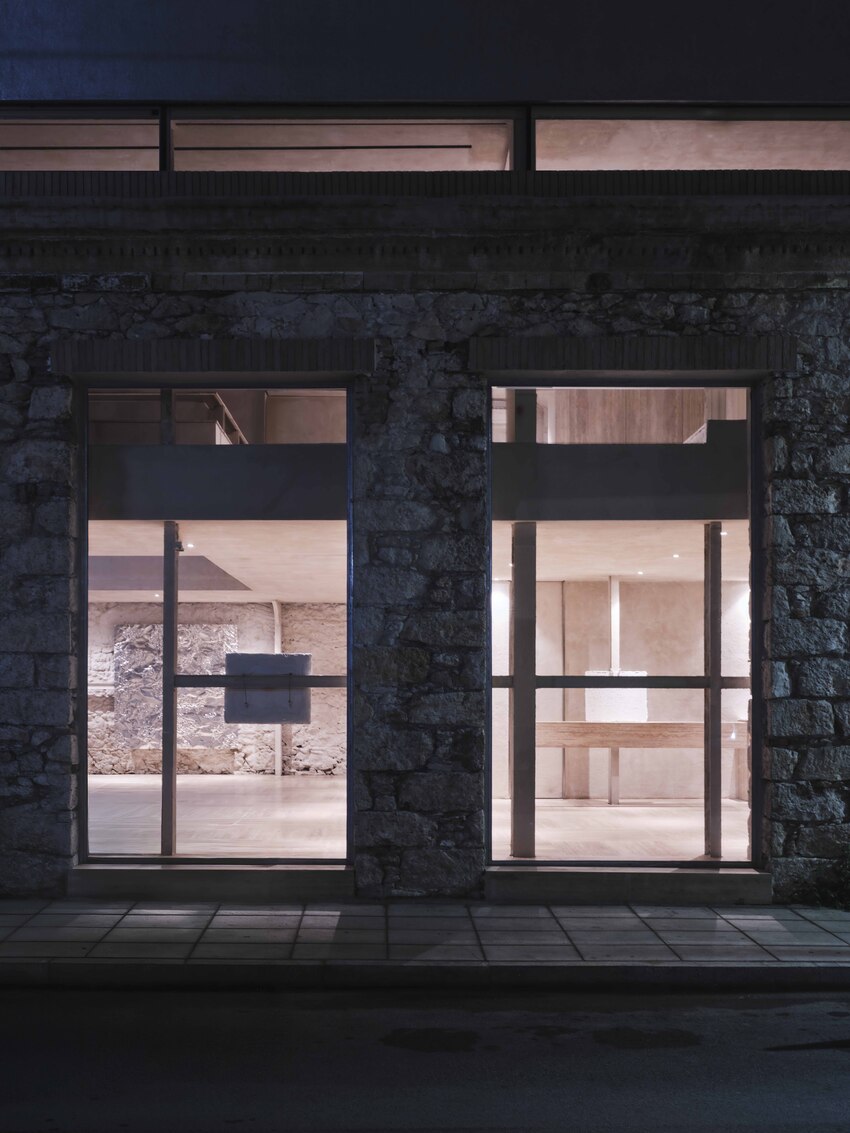
Photo: ©Yorgos Kaplanidis.
Inside
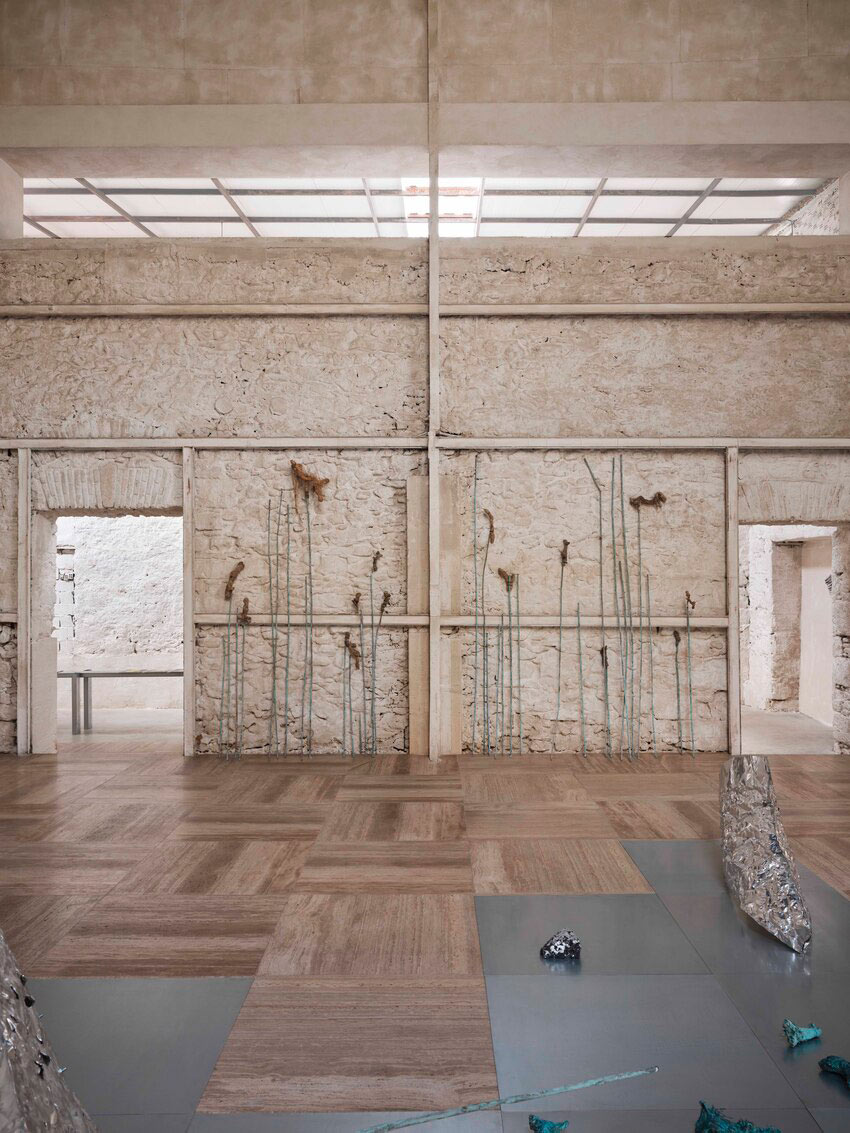
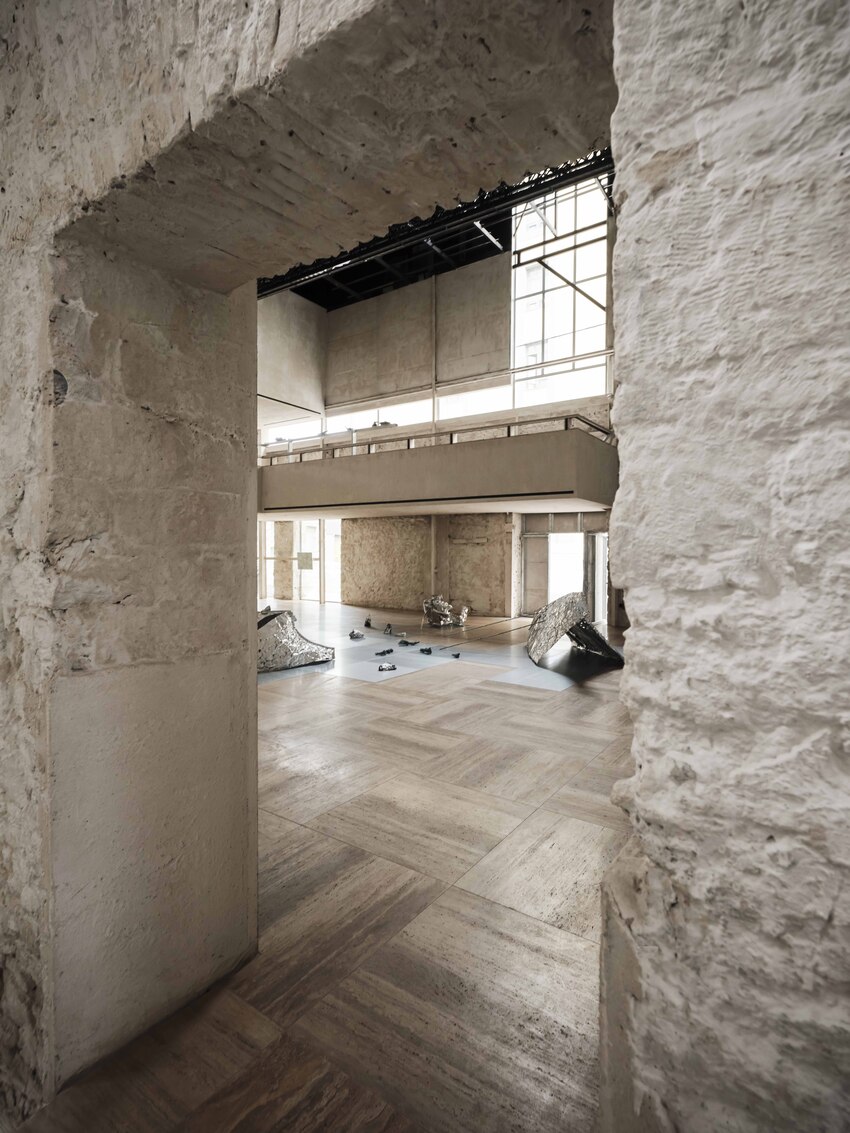
Architectural whitewashing Inside, the approach shifts toward unification. To bring coherence to the expansive space, a thin coat of simple stucco was applied over the surfaces – a traditional, coarser filler now largely absent from modern mortars. Liberated from the fatigue of fake perfection, the intervention embraces the honesty of authentic materials.
This architectural “whitewashing” turns the various damaged surfaces, structural bracing, metal panels and brick infill into a continuous tonal field, creating an abstracted, almost model-like quality. Paradoxically, this unifying layer accentuates the disparate textures underneath, the many “surgeries” Castor Place has undergone through the decades now emerge in sharper relief.
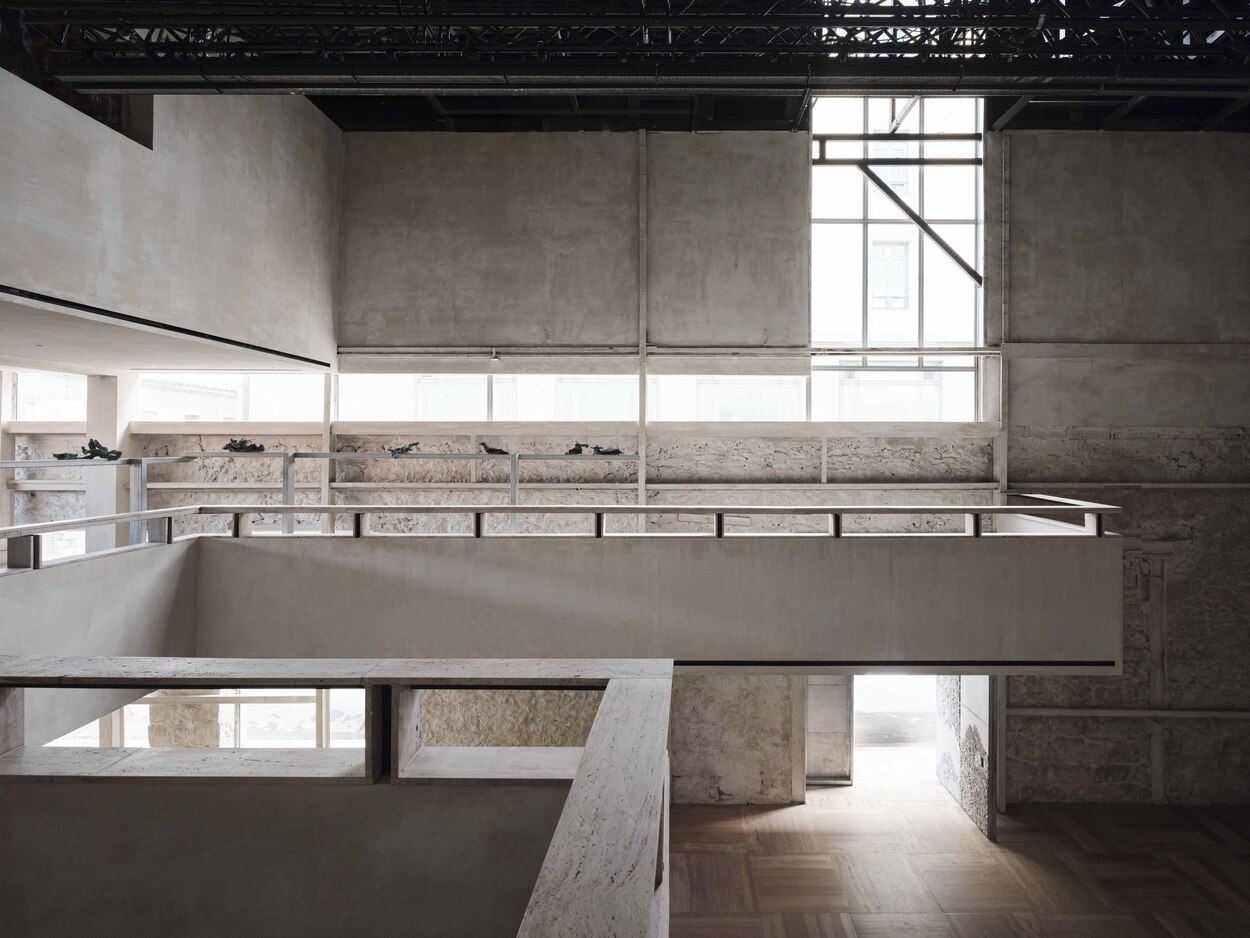
Photo: ©Yorgos Kaplanidis.
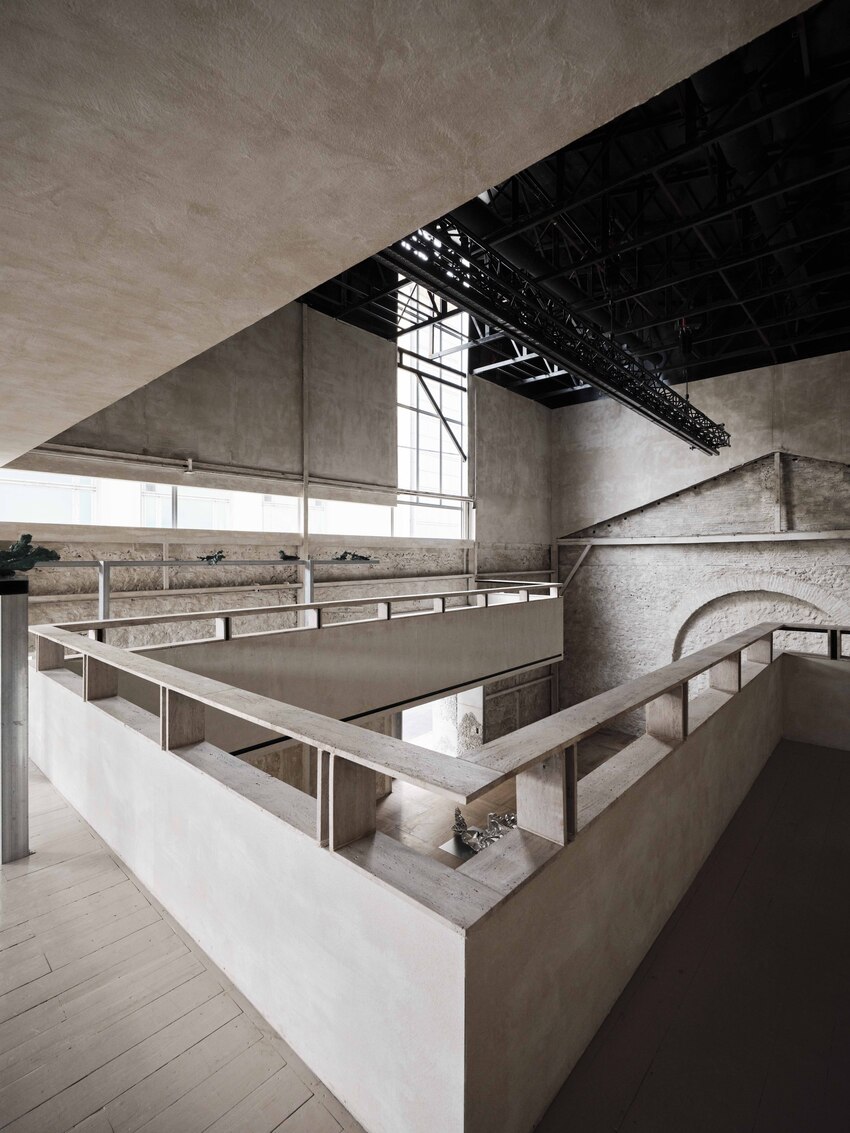
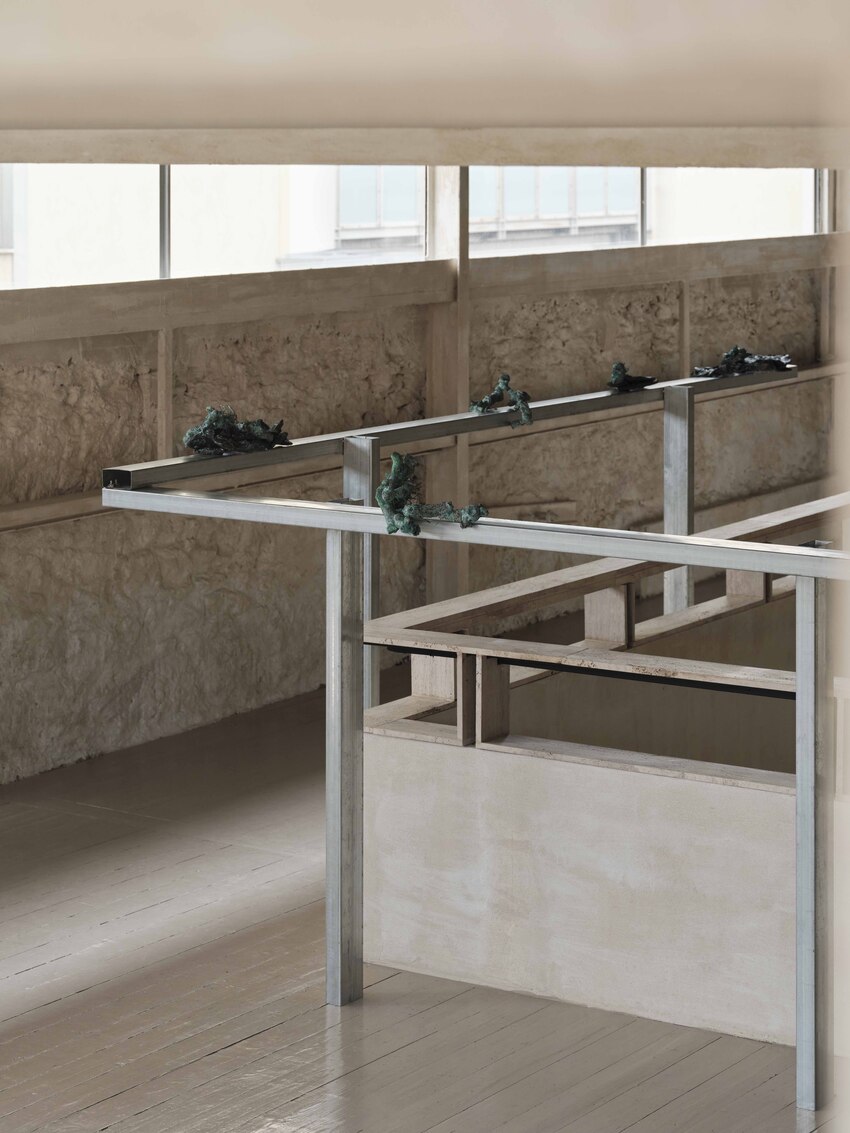
The interior volume was further restructured with balconies that provide multiple elevations, overhead trusses and a suspended gantry crane lighting system along the roof, enabling flexible programming and multiple modes of use. The space transforms continuously, supporting each event without imposing a fixed identity.
Existing trusses, once external structural elements, were conserved and re-framed as ready-made decorative features, intentionally interrupting the window views as a tangible reminder of the building’s accumulated past.
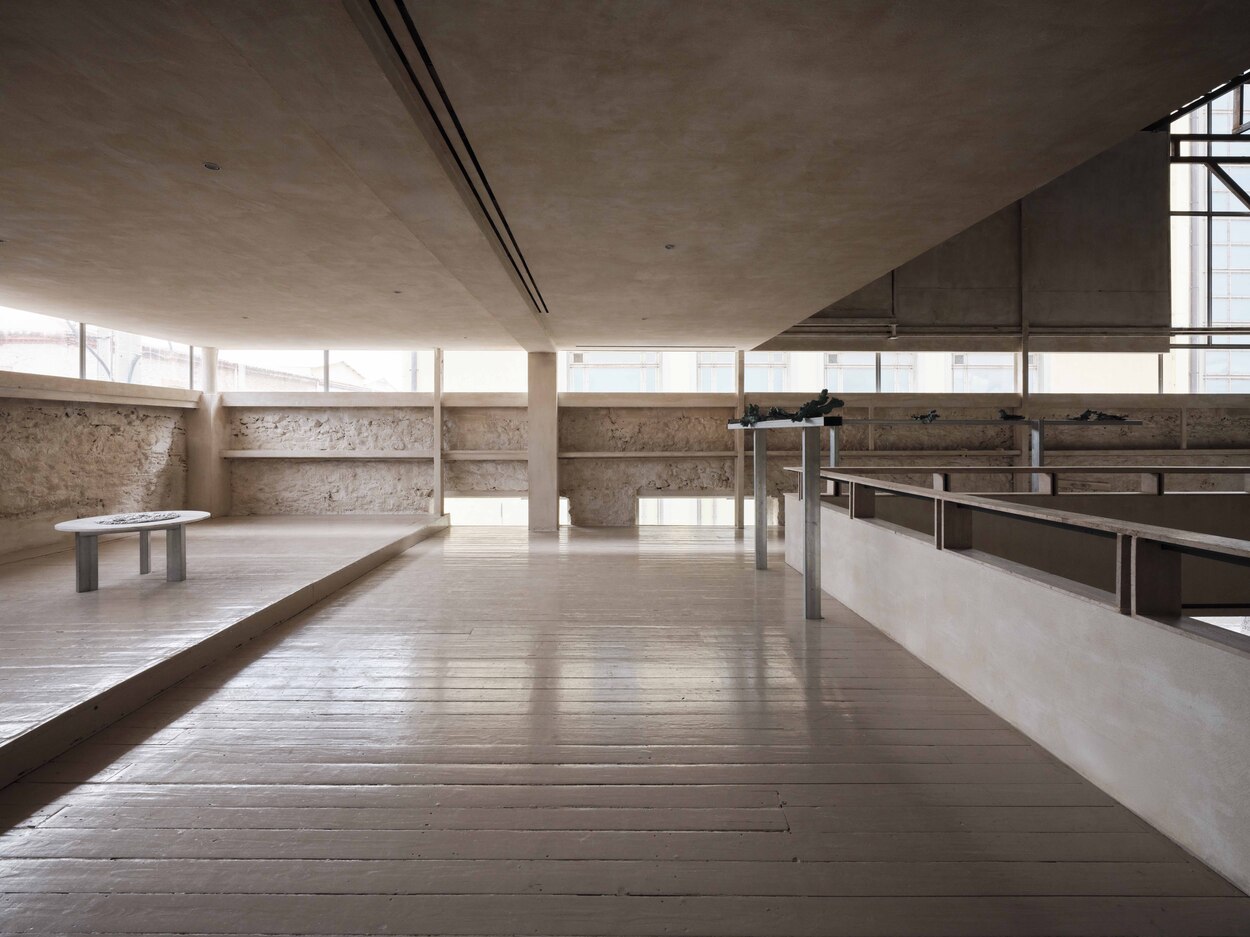
Photo: ©Yorgos Kaplanidis.
A collaborative manifestation
Βαθυμετρία /Casting Water The building’s inaugural exhibition, was conceived not merely as an event but as a lens for presenting the space itself. Working closely with artist Stefania Strouza and curator and architect Giulio Margheri, the project became an exploration of how art, curation, and architecture can coalesce.
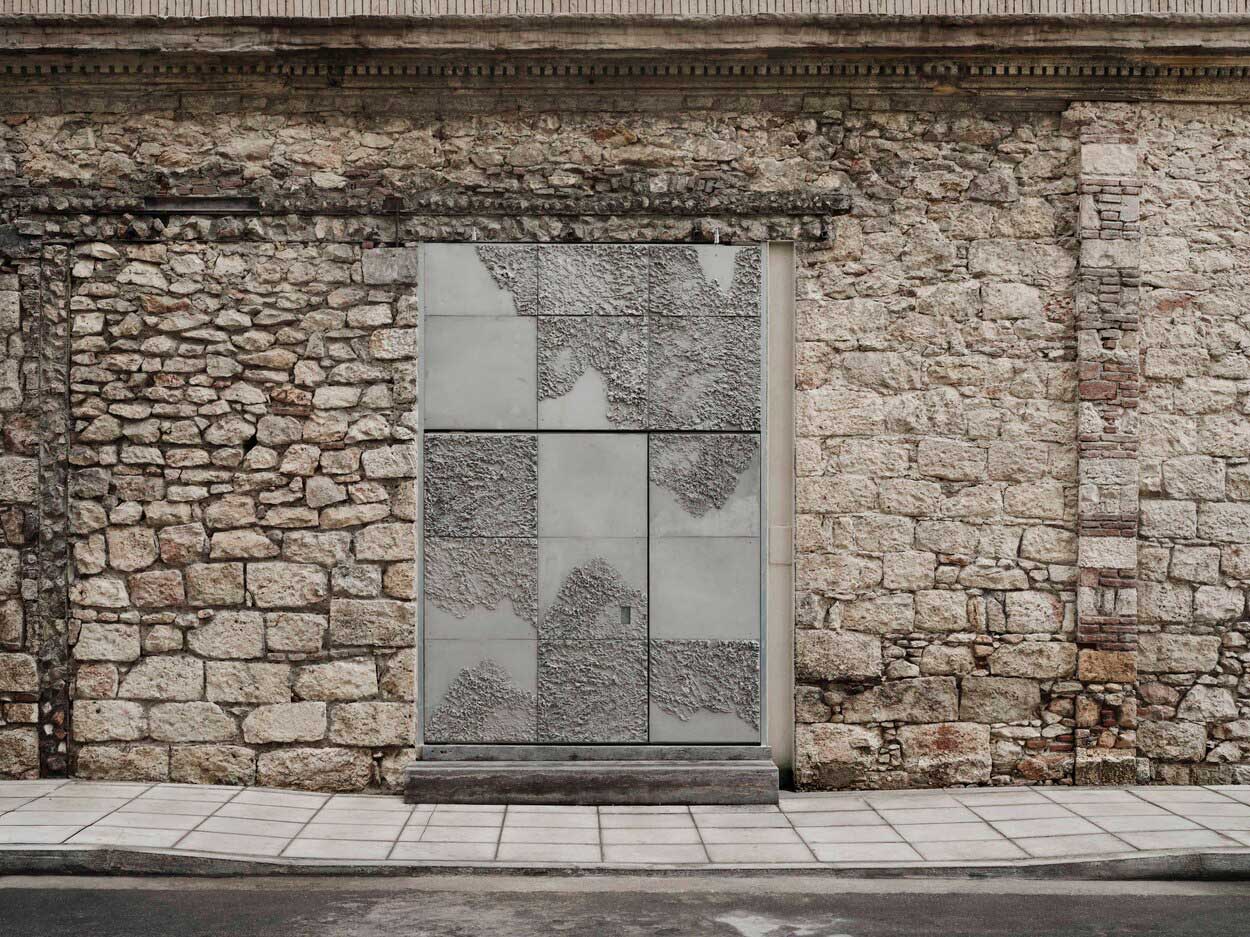
Central to this collaboration is a pair of monumental cast-aluminum doors, intended as a permanent installation that will remain in-situ. The doors embody the synergy between Manhattan Projects, Stefania Strouza, and the fabrication team Qoop. In dialogue with the building’s layered history, they occupy a similarly liminal state, feeling unmistakably contemporary while resonating with the façade’s existing textures and imperfections.
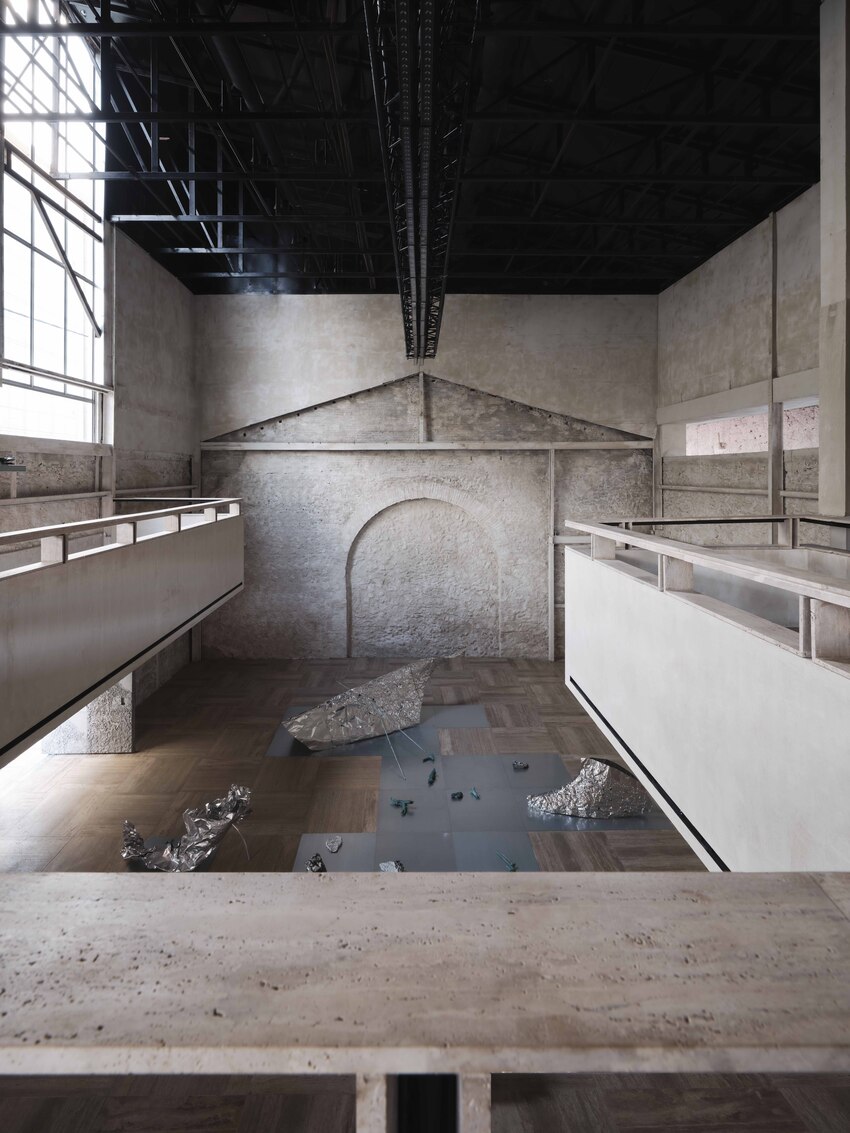
Photo: ©Yorgos Kaplanidis.
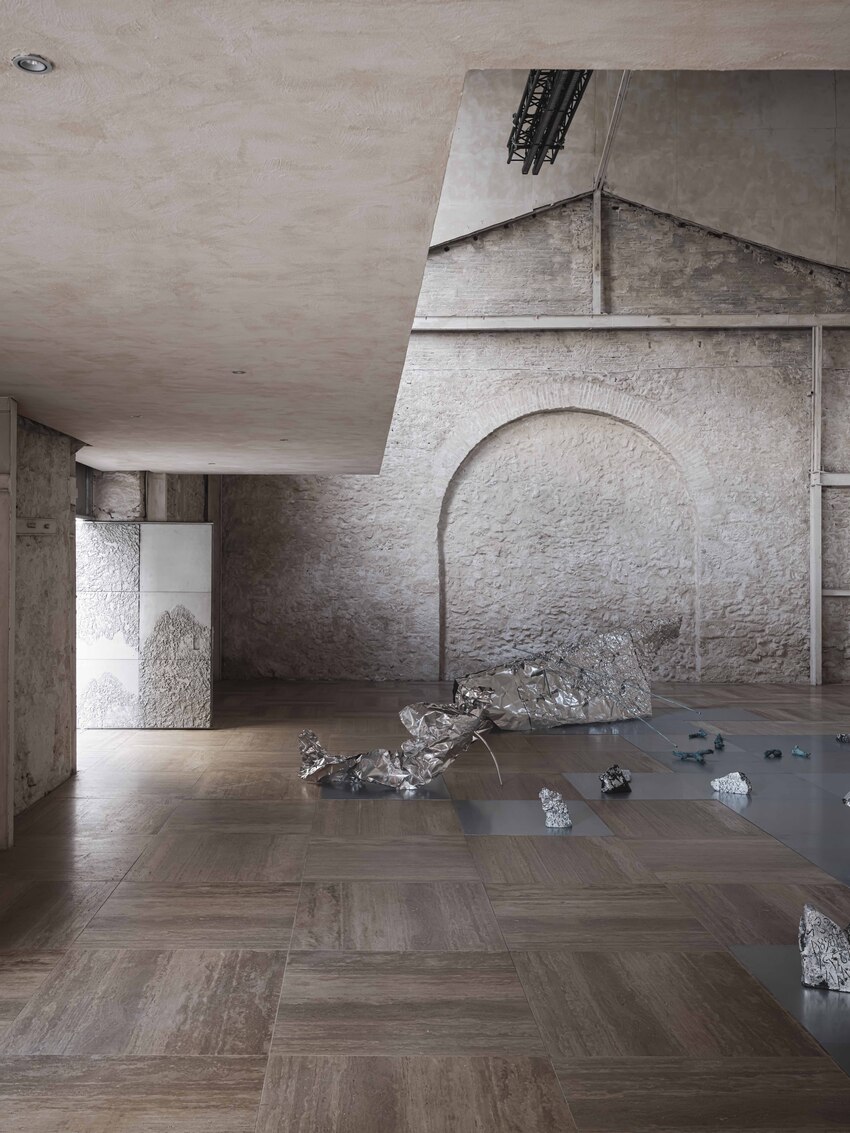
Strouza’s practice is defined by a sustained engagement with aluminum, valued for its malleability, reflectivity, and transformative potential. For the doors, she evoked the softness of cast aluminum in contrast against the solidity of the surrounding stone walls. Drawing inspiration from Piraeus’ maritime context, she developed an abstract pattern whose textures reference bathymetry, the science of measuring water depth for mapping ocean floors. The reliefs, organized through a grid corresponding to the building’s architectural elements, allude to sonar images, liquid topographies and submerged landscapes. For Strouza, a parallel exists between the casting process, creating a negative form in sand and pouring molten metal into the cavity, and bathymetric practices that document fluid, underwater systems.
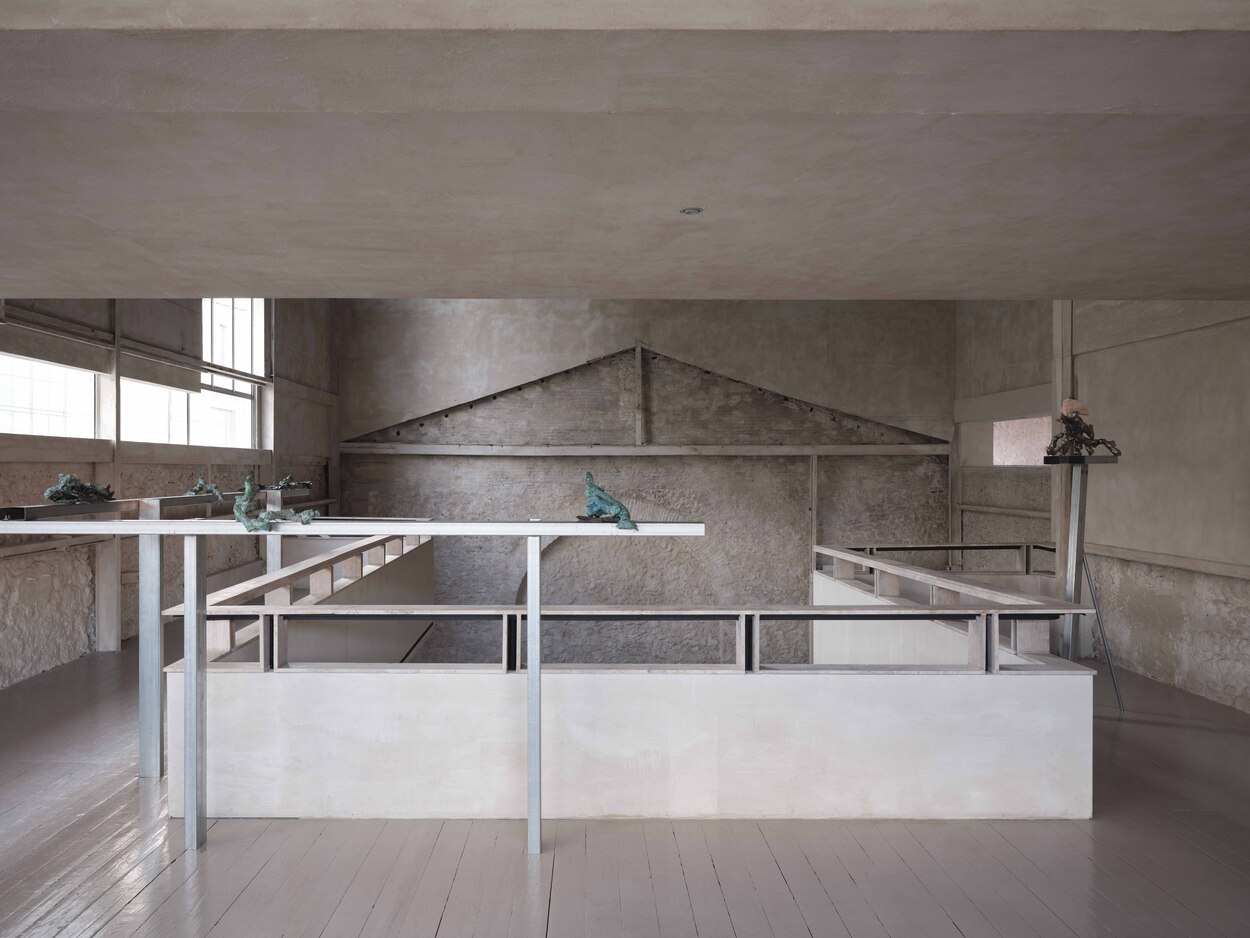
Photo: ©Yorgos Kaplanidis.
Castor Place a Pireo, Grecia
A Pireo, nell’area storica dei magazzini portuali ottocenteschi, lo studio MPNYC ha trasformato un ex deposito in uno spazio culturale multifunzionale destinato a mostre, conferenze, concerti, workshop e performance. Il progetto di riuso architettonico mantiene il dialogo tra le diverse stratificazioni dell’edificio: il basamento originario in pietra è stato restaurato, mentre il volume metallico aggiunto negli anni Novanta è stato reinterpretato come un monolite sospeso sopra la struttura storica.
Gli interni sono stati ripensati come uno spazio flessibile e riconfigurabile, caratterizzato da superfici uniformate tramite un sottile strato di stucco, passerelle sospese, nuove balconate e un sistema di illuminazione mobile. Grande attenzione è stata dedicata anche ai materiali e alla luce naturale, introdotta attraverso una finestra verticale a tutta altezza.
A inaugurare la nuova vita di Castor Place è una mostra dell’artista Stefania Strouza, co-curata da MPNYC e dall’architetto italiano Giulio Margheri.
(Riassunto in italiano a cura di weArch)
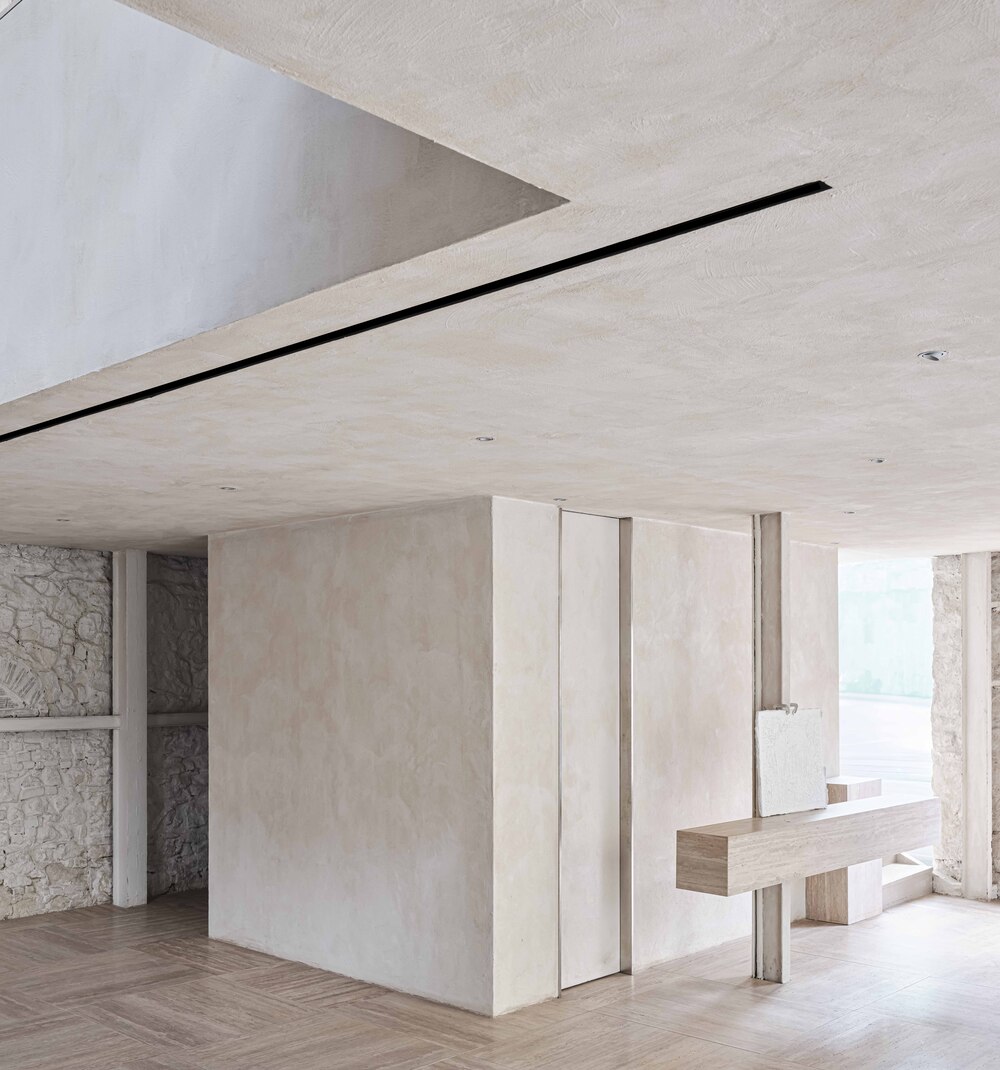
Photo: ©Yorgos Kaplanidis.